

Have you ever been promised micron-level accuracy, only to watch your throughput nosedive on the factory floor? That frustration is exactly why direct drive linear stage technology has taken off so fast. As a manufacturer with over nine years of hands-on experience in manual and motorized positioning stages and precision alignment platforms, we hear one question almost every week: “Can a direct drive linear stage truly deliver sub-micron positioning accuracy in demanding production environments without compromising speed and throughput?” This post answers that question head-on. We’ll pull in real production data, application know-how from Semiconductor wafer inspection and precision metrology, and practical lessons learned from integrating sub micron positioning stage solutions around the globe.
Before we jump into speed-vs-accuracy trade-offs, let’s make sure we’re all talking about the same thing. A linear motor stage isn’t just a fancy upgrade—it’s a fundamentally different way to move a payload.
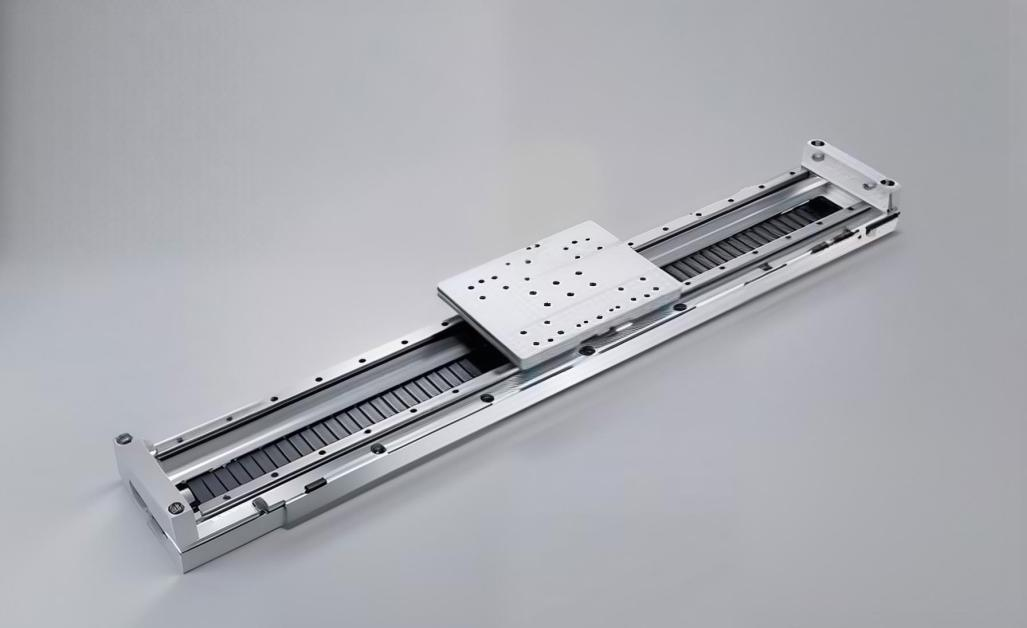
What Makes a Direct Drive Linear Stage Different?
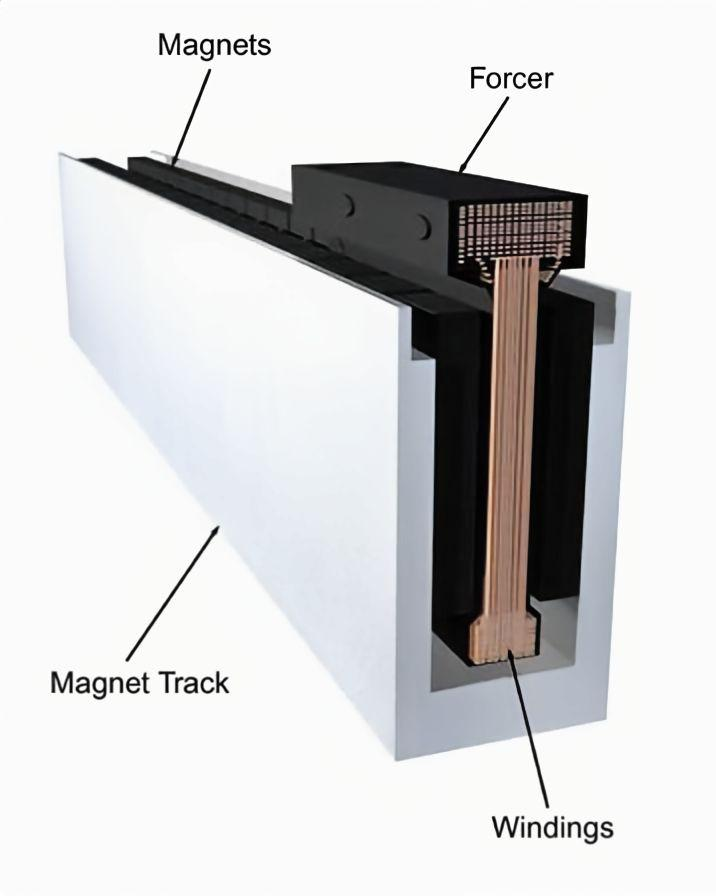
A direct drive linear stage uses a linear motor to generate motion right at the load. No rotary motor, no coupling, no ball screw, no belt. The “forcer” (coil assembly) glides over a magnetic track, and the only mechanical contact comes from the linear guide bearings. That’s it. There is no screw whip, no coupling wind-up, and no gearbox backlash.
Because power is converted directly into linear force, you get a linear motor stage that reacts in microseconds. Push a command, and the stage moves. Reverse direction, and there’s no dead zone. This clean architecture is the starting point for any serious sub micron positioning stage project.
Key Specs You Can Expect from a Modern Direct Drive Linear Stage
We’ve built and tested hundreds of these systems. Here’s what a properly engineered direct drive linear stage can achieve in a real factory, not just in a lab:
Resolution: 1 nanometer or finer, with linear optical encoders.
Bi-directional repeatability: ±0.1 µm across a 300 mm stroke.
Maximum speed: 2 to 5 m/s, depending on bearing and payload.
Acceleration: 2 to 5 g on iron-core designs; 1 to 3 g for ironless versions.
Straightness and flatness: under 1 µm over 100 mm travel with crossed-roller or air-bearing guides.
No amount of tweaking will squeeze those numbers out of a worn-in screw stage. Which brings us to the comparison everyone asks about.
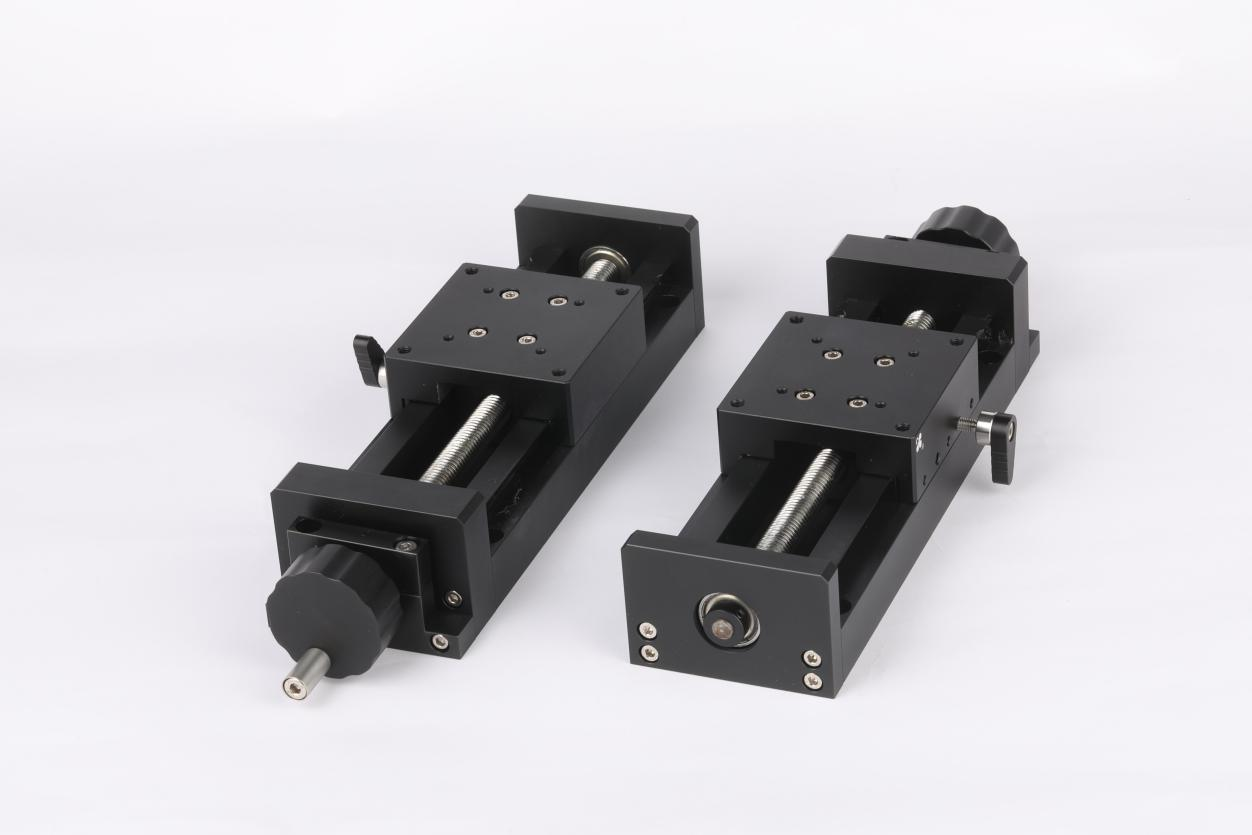
Direct Drive Linear Stage vs. Ball Screw Stage: Zero Backlash, Maintenance-Free, High Speed vs. Backlash, Wear, Limited Acceleration
Let’s settle the debate: direct drive linear stage vs. ball screw stage. The headline differences? Zero backlash, maintenance-free, high speed vs. backlash, wear, limited acceleration. Those are not marketing bullets—they are physics.
Here’s a detailed side-by-side table we often share with customers who are trying to decide where to invest their budget.
| Feature | Direct Drive Linear Stage | Ball Screw Stage |
| Backlash | Zero (no mechanical drive train) | 2–5 µm typical, even with pre loaded nuts |
| Mechanical wear | Almost none in the motor; guides are rated for billions of microns of travel | Screw and nut wear steadily; backlash grows over time |
| Maximum speed | 2–5 m/s | 0.5–1 m/s |
| Acceleration | 2–5 g (stiffer structure, higher force density) | 0.5–1 g (limited by screw inertia and whip) |
| Positioning accuracy | ±0.1 µm with 1 nm encoder | ±2–5 µm, heavily dependent on mapping |
| Settling time | <10 ms after a 1 mm move | 30–80 ms due to residual vibration and backlash reversal |
| Maintenance | Inspect bearings, clean encoder scale | Regular lubrication, screw adjustment, eventual replacement |
| Typical life | Motor >50,000 hours; guide lifetime depends on load | Screw life 10,000–20,000 km of travel before accuracy degrades |
A ball screw stage is a brilliant invention, and it still makes sense for low-duty, cost-sensitive applications. But if your process demands a true sub micron positioning stage that keeps running 24/7, the direct drive linear stage pays for itself fast—often within the first year of reduced downtime and higher throughput.
How a Sub Micron Positioning Stage Holds Accuracy at Full Speed
Now back to that nagging question. Can you really hit sub-micron numbers without crawling along? Yes. The secret sits in three places.
1. Direct-drive force with no intermediary.
A linear motor stage applies force straight to the payload. There’s no screw to twist, no coupling to store energy. That means when the controller commands a 0.5 µm step, the stage moves exactly that far—no wind-up, no release.
2. High-resolution feedback right at the point of interest.
Almost every sub micron positioning stage we build uses a linear encoder with a signal period of 20 µm or less. Interpolation pushes resolution down to 1 nm. Because the encoder reads position directly off the moving carriage, it ignores screw errors entirely.
3. Servo tuning that tames the high dynamics.
A stiff direct drive linear stage can be tuned with high servo bandwidths. Feed-forward algorithms and jerk control let the stage accelerate at 3 g, cruise at 2 m/s, and still settle within a ±0.1 µm window in under 15 milliseconds. That’s the magic formula for high-throughput sub micron positioning stage performance.
Real Production Numbers
In a semiconductor inspection cell we helped automate last year, a linear motor stage replaced an older ball-screw XY system. The process required 8 stops per wafer, each with a ±0.2 µm tolerance window. The old system took 420 ms per move-and-settle cycle. The new direct drive linear stage reduced that to 170 ms. Throughput jumped 28%, and the Cpk for positioning repeatability rose from 1.1 to 1.6. That’s a factory-floor answer to the long-tail question.
Where Sub-Micron Precision Really Matters
Not every machine needs a sub micron positioning stage. But when you operate in these spaces, it’s non-negotiable.
Semiconductor wafer inspection and precision metrology
Wafer defect review, overlay metrology, and critical dimension measurement all rely on fast, repeatable stage motion. A direct drive linear stage steps from die to die, holds position within a few tens of nanometers, and does it thousands of times per hour. Any backlash or screw-induced vibration would wreck the measurement. This is exactly the kind of demanding production environment the long-tail question targets, and it’s where linear motor stage platforms have become the default.
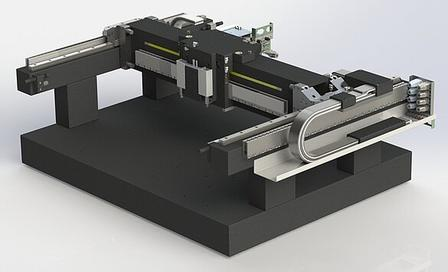
Laser micromachining and scribing
Cutting features under 10 µm wide requires constant velocity control with zero ripple. A sub micron positioning stage combined with a linear motor delivers smooth motion at high speed, avoiding the periodic errors that ball screws introduce.
Medical device assembly and dispensing
Think of micro-fluidic chips or implantable sensors. You need a direct drive linear stage that can perform thousands of small-amplitude moves without creating heat or shedding particles. Maintenance-free operation is critical for cleanroom compatibility.
Optical alignment and photonics packaging
Aligning a fiber to a waveguide demands sub-micron step resolution, often over millimeter-scale travel. A linear motor stage with nanometre encoders lets you run fast search routines and then lock in with precision.
Selecting a Linear Motor Stage: 5 Factors That Make or Break Your Project
Shopping for a direct drive linear stage can feel overwhelming. Over the last nine years, we’ve boiled the selection process down to five practical checkpoints.
1. Payload and Orientation
Real payload, not just the mass of the part. Factor in cables, brackets, and any off-center loads. If the stage mounts vertically, you need enough continuous force to fight gravity without overheating. A linear motor stage with a safety margin of 20-30% on peak force will hold its accuracy longer.
2. Stroke and Package Size
Direct drive stages shine from 50 mm up to 1200 mm and beyond. Pay attention to overall length—a direct drive linear stage with a moving coil design will be about twice the stroke length plus the carriage width. Ironless motors often fit in a tighter envelope but trade some force density.
3. Accuracy vs. Repeatability
For a sub micron positioning stage, both matter. Accuracy comes from encoder quality, stage straightness, and thermal stability. Repeatability depends on the drive train’s reversal errors—zero in direct drive. If your application only needs repeatability, you can sometimes relax the accuracy spec, but we recommend a good linear encoder anyway.
4. Cleanroom and Environment
A ball screw stage puts lubricant and particles into the air. A direct drive linear stage can be built with stainless steel covers, low-outgassing cables, and clean greaseless bearings for ISO 5 environments. This is a must for Semiconductor wafer inspection and precision metrology.
5. Integration and Support
Buying a stand-alone linear motor stage is one thing. Getting it to speak with your vision system, vibration isolation table, and safety circuit is another. Our team has spent nine years solving these exact integration puzzles on manual and electric stages, as well as full alignment platforms. If you’re unsure how a sub micron positioning stage will fit into your existing machine, talk to us early. It saves months of rework.
Why “Maintenance-Free” Changes Your Cost Model
A phrase we use often is “maintenance-free,” but let’s be honest—nothing is truly zero maintenance. Guide bearings still need a wipe and inspect cycle. Yet the difference between a direct drive linear stage and a ball screw stage in operating cost is enormous.
A ball screw stage in a 24/7 scanning line might need lubrication every 2–3 months and screw replacement every 2–3 years. Each service event means recalibration and downtime. Over five years, that can add up to 20-30 days of lost production. The linear motor stage eliminates those screw-related services. The MTBF of the motor itself can exceed 50,000 hours. When you calculate total cost of ownership, the initial higher price of a sub micron positioning stage often turns into a five figure saving.
Frequently Asked Questions
Can a direct drive linear stage truly deliver sub-micron positioning accuracy in demanding production environments without compromising speed and throughput?
Absolutely. As we showed earlier, a well-engineered direct drive linear stage combines zero-backlash motion with high-resolution linear encoders. In semiconductor wafer inspection and precision metrology lines, these stages routinely hit ±0.1 µm repeatability while moving at 2 m/s and accelerating at 3 g. The key is removing mechanical compliance—without a screw or gearbox, the stage has nothing to wind up and release, so settling times stay incredibly short. Throughput goes up, not down.
How long does a linear motor stage last?
The motor element itself has no contacting parts, so it can run for over 50,000 hours with no performance drift. The life limiter is typically the linear guide, which depends on load and contamination. With proper protection, a linear motor stage can hold its original accuracy for a decade.
Is a direct drive linear stage harder to control?
Not if the drive and tuning are set up correctly. Today’s servo drives include auto-tuning routines and advanced feed-forward that make a direct drive linear stage no more difficult to commission than a screw stage. Our applications team supplies pre-tuned parameter sets for common payload ranges, so you can be up and running in hours.
What about heat?
Linear motors do generate heat in the coil, but a sub micron positioning stage built with good thermal management (aluminum base, optional water cooling) keeps temperature rise under a few degrees. In precision metrology setups, we often use ironless motors to eliminate cogging and minimize heat-induced expansion.
Let’s Build Your Sub Micron Positioning Stage Together
Choosing between a direct drive linear stage and a traditional screw system isn’t a catalog decision—it’s a process investment. You need a partner who understands that a sub micron positioning stage must deliver real throughput on a real production floor, not just impressive data sheets.
We’ve been designing, manufacturing, and selling manual and motorized stages, precision alignment platforms, and full-series positioning systems for over nine years. From standard linear motor stage modules to fully integrated multi-axis alignment engines, we supply the hardware and the application know-how. Whether you’re working on next-gen semiconductor wafer inspection and precision metrology tools or a high-speed laser process, we can help you pick the right direct drive linear stage and configure it for your payload, environment, and duty cycle.
Don’t let another production quarter slip by with a positioning system that limits your speed. Reach out to our team through the contact form on our website, or give us a call. Tell us about your motion challenge, and we’ll work with you to specify a sub micron positioning stage that fits your budget and exceeds your throughput targets. Let’s make sub-micron motion a production reality, not a lab curiosity.
Post time: Aug-17-2026


