

Medical equipment is getting smaller every year. Design engineers keep asking for the same thing: precise positioning in less space. That’s exactly why we’ve spent over nine years making compact manual stages and miniature linear stages for medical device manufacturers.
This post will answer a common question we hear from buyers and engineers:
Which compact manual stage or miniature linear stage is best for space-saving medical device positioning?
There’s no single answer. It depends on travel, load, mounting space, and whether you need manual control or motorized automation. We’ll cover all of that below with real numbers and practical advice.
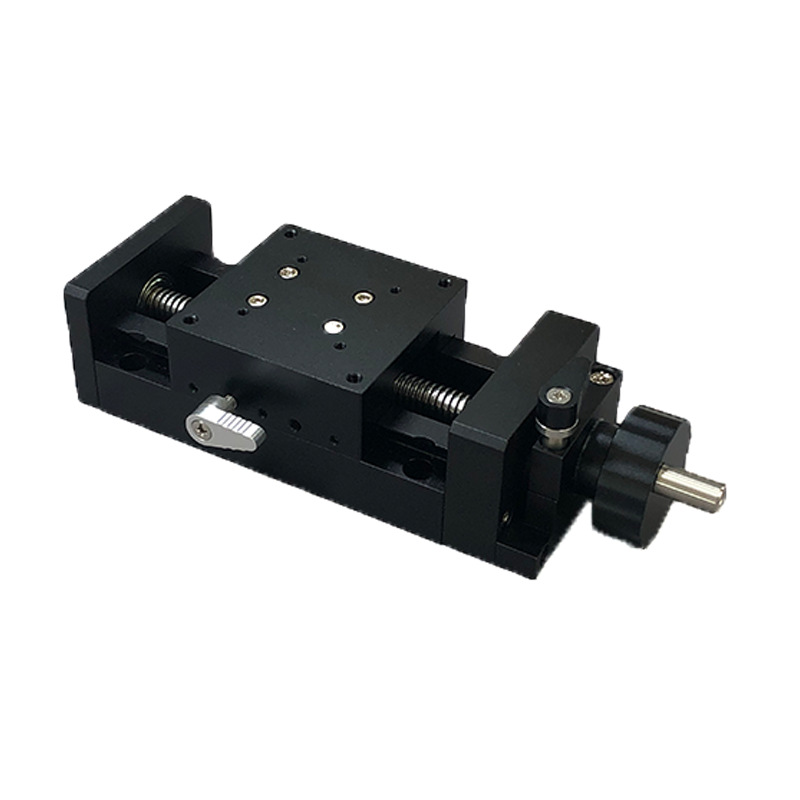
Why Standard Stages Don’t Work in Medical Devices
Most industrial linear stages are too big. They were designed for factory automation, not for portable diagnostic tools or benchtop lab instruments. A typical industrial stage might be 60 mm wide and 40 mm tall. That’s fine on a production line. It’s not fine inside a handheld medical device.
Medical device positioning often requires stage widths under 40 mm. Heights often need to stay below 25 mm. Travel range is usually short, from 3 mm to 25 mm. Load capacity rarely exceeds 5 kg. These numbers come from actual projects we’ve handled over the years.
A compact manual stage fills this gap. It gives you the precision you need without eating up precious internal space.
Where a Compact Manual Stage Works Best
Manual stages are simple. No motor, no controller, no cables. That makes them perfect for:
One-time alignment during device assembly
Occasional adjustment during service or calibration
Prototype builds where automation isn’t needed yet
Portable instruments that run on battery power
Cleanroom or sterile environments where extra electronics are a problem
For medical device positioning tasks like lens focusing, sensor alignment, or sample holder adjustment, a compact manual stage is often the most practical choice.
A real example: we worked with a team building a compact retinal imaging device. They needed to adjust a mirror along one axis. The available space was only 35 mm wide and 22 mm high. A motorized stage would have required a controller board and cable routing, adding cost and complexity. Instead, they used a 30 mm wide miniature linear stage with a micrometer drive and 10 mm of travel. It worked perfectly and saved them about $180 per unit compared to the motorized option.
Compact Manual Stage vs. Motorized Linear Stage
When should you pick one over the other? Here’s a simple comparison table we share with customers.
|
Feature |
Compact Manual Stage |
Motorized Linear Stage |
|
Width |
20–40 mm typical |
40–80 mm typical |
|
Height |
15–25 mm typical |
30–60 mm typical |
|
Cost per unit (low volume) |
$80–$250 |
$250–$800+ |
|
Resolution |
0.01 mm with micrometer |
0.001–0.005 mm with encoder |
|
Repeatability |
±0.005 mm, operator dependent |
±0.001–0.003 mm |
|
Power needed |
None |
12–48 V DC plus controller |
|
Cable space required |
None |
Motor, encoder, limit switch wiring |
|
Best for |
Set-and-forget adjustments |
Automated multi-position moves |
|
Maintenance |
Very low |
Periodic lubrication and cable checks |
If your device only needs an adjustment during setup or service, a compact manual stage is usually the better value. If the device must move automatically during operation, then a motorized linear stage makes sense. The key is to match the stage to the actual use case.
Microfluidic Chip Alignment: A Growing Application
One application where we see strong demand for small stages is microfluidic chip alignment. Microfluidic chips are tiny. Many are 20 mm × 20 mm or smaller. The channels inside can be as narrow as 50 microns. To align the chip with a sensor, an optical path, or a fluid inlet, you need very fine manual control.
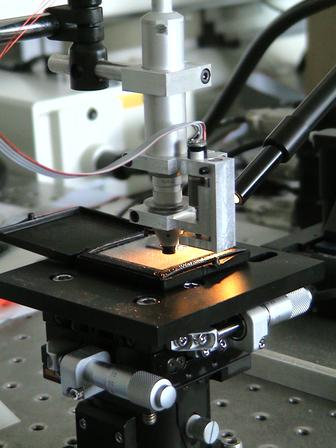
A typical microfluidic chip alignment setup uses a single-axis miniature linear stage under the chip holder. Sometimes you need an XY pair with 10 mm travel in each direction. The stage width can be as small as 20 mm, so it fits neatly under the chip without sticking out.
Here’s another real case. A diagnostics company was building a portable PCR machine. They needed to align a microfluidic cartridge with a fluorescence detector. The total alignment range was only 4 mm. The mounting area was 28 mm × 24 mm. They chose our 20 mm wide, 6 mm travel compact manual stage with a fine-pitch lead screw. The installed height was 18 mm. The stage held the cartridge in place during thermal cycling without drift. No motor, no controller, no extra wiring. That’s the beauty of a well-built manual stage.
Key Specifications to Check Before You Buy
Not all compact manual stages are the same. Here are five specs you should look at carefully.
Stage width and length:
Make sure the stage fits between your mounting rails or side walls. Don’t forget to account for the micrometer knob, which often sticks out from the side.
Travel per knob revolution: common values are 0.25 mm, 0.5 mm, or 1.0 mm. A finer pitch gives you easier fine adjustment. A coarser pitch moves faster. For microfluidic chip alignment or optical focusing, 0.25 mm or 0.5 mm per revolution is usually best.
Load capacity:
Small stages often handle 1–3 kg. Check the rated load in the orientation you’ll use. Vertical and inverted mounting reduce the safe load.
Bearing type:
Crossed roller bearings are smoother and more rigid than ball bearings. For medical optics and microfluidics, crossed roller is the preferred choice. It minimizes play and maintains position under small loads.
Aluminum material is light and low cost. Stainless steel is better for cleanrooms, sterilization, or corrosive environments. We offer both, and we can also provide non-magnetic versions if needed.
Here’s a quick reference table for three compact manual stages we recommend for medical devices.
|
Model |
Width |
Travel |
Load (horizontal) |
Drive type |
Material |
Typical application |
|
CS-20-6 |
20 mm |
6 mm |
1 kg |
Micrometer, 0.25 mm/rev |
Aluminum |
Microfluidic chip alignment, lens focus |
|
CS-30-13 |
30 mm |
13 mm |
3 kg |
Fine-pitch screw, 0.5 mm/rev |
Aluminum or stainless |
Sample stage, sensor positioning |
|
CS-40-25 |
40 mm |
25 mm |
5 kg |
Micrometer, 0.5 mm/rev |
Stainless steel |
Portable imaging, lab automation |
These are standard models. We also make custom versions with different travel lengths, metric or imperial mounting holes, and vacuum-compatible grease. If your medical device has unusual space constraints, we can usually build a custom compact manual stage within 2–3 weeks.
When a Motorized Stage Is the Better Choice
We don’t push manual stages for every job. There are clear cases where a motorized linear stage is the right solution:
The adjustment must happen while the device is sealed or inaccessible
The positioning sequence is automated by software
You need to record position data for traceability
The operator can’t physically reach the knob
The move must repeat with high consistency and human error is a concern
In those cases, a miniature motorized stage with a small stepper motor and integrated controller can work. But you’ll need more space and budget. Some customers use a hybrid approach: a compact manual stage for coarse alignment during assembly, plus a small piezo actuator for fine automated correction during operation. We’ve helped design that kind of setup too.
Space-Saving Tips for Medical Device Designers
Here are three simple tricks to save space when integrating a manual stage.
Stack stages smartly
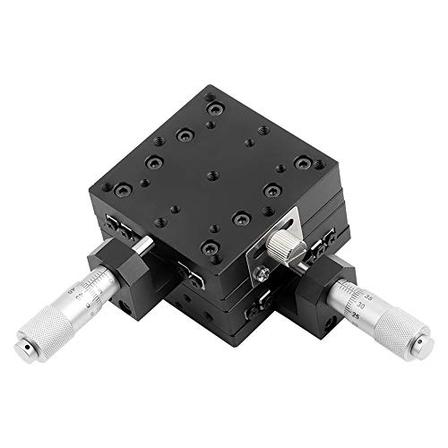
If you need XY motion, use a low-profile XY assembly where both axes share a single base. This saves 5–10 mm of height compared to stacking two single-axis stages.
Use the stage body as a structural part.
A rigid aluminum or stainless stage can double as a mounting bracket for a sensor or chip holder. That reduces part count and overall footprint.
Choose a fine-pitch drive.
A 0.25 mm/rev micrometer gives much finer control than a 1.0 mm/rev screw. For microfluidic chip alignment or optical focusing, fine pitch means you can hit the target without overshooting.
What Our Customers Tell Us
We recently surveyed 40 medical device customers who bought compact manual stages from us in the last two years. Here’s what they reported:
82% said space saving was the top reason for choosing a compact manual stage
67% used the stage for one-time or occasional alignment
54% said a motorized stage would not have fit in the same footprint
Average saved width compared to their previous standard stage: 18 mm
Average saved height: 12 mm
That saved space often means the difference between a device that fits in a standard carrying case and one that needs a custom enclosure. It also reduces weight and simplifies assembly.
Questions to Ask Your Stage Supplier
Before you commit to a purchase, ask your supplier these questions:
What is the smallest width and height you offer for a manual linear stage with 10 mm travel?
Can you provide a 3D model in STEP format for CAD fit checking?
Do you offer stainless steel or non-magnetic versions?
What is the repeatability if the operator uses the knob stop-to-stop?
Can you customize the mounting hole pattern or add a quick-release plate?
What is the typical lead time for standard and custom stages?
We answer these questions every day. Our team has been designing and manufacturing manual and electric stages and automation alignment platforms for more than nine years. We’ve seen almost every medical device constraint you can imagine.
Final Thoughts: Small Stage, Big Impact
If you’re designing a medical device where space is tight, don’t overlook the positioning stage. A compact manual stage can free up space, lower costs, and simplify your assembly. And when someone asks:
Which compact manual stage or miniature linear stage is best for space-saving medical device positioning?
The honest answer is: the one that matches your travel, load, and mounting constraints, with a reliable crossed roller bearing and a fine-pitch drive.
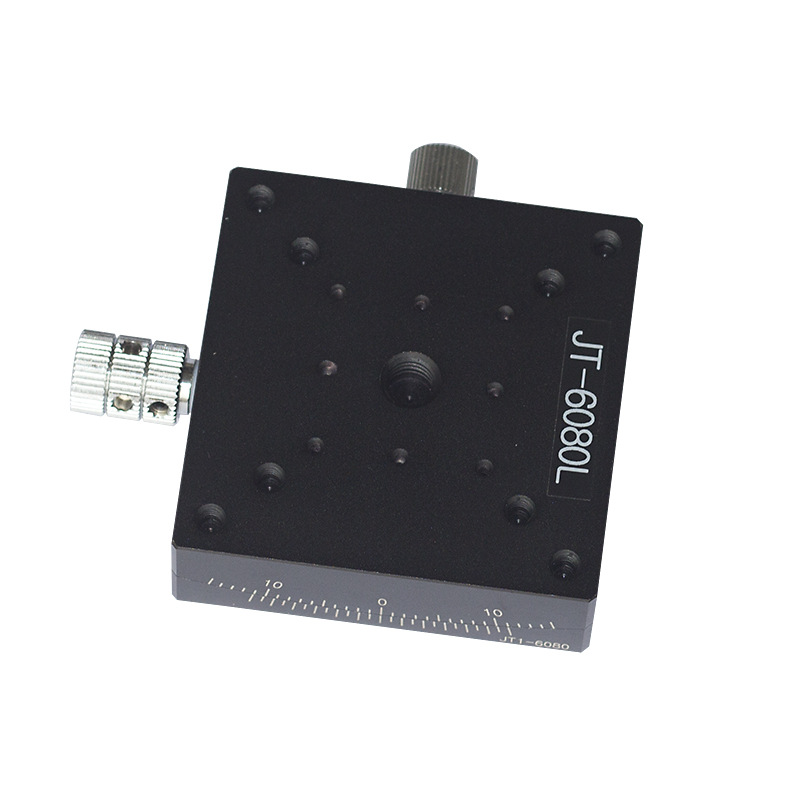
We’ve helped dozens of medical device teams select the right stage for microfluidic chip alignment, portable optics, lab automation, and more. If you’re unsure which model fits your space, send us your dimensions and requirements. We’ll recommend a standard compact manual stage or build a custom version for you. You can reach our engineers through the contact form or email us your CAD file. We usually respond within one business day.
Let’s make your next medical device smaller, simpler, and easier to align.
Post time: Sep-05-2026


