

Let’s be honest. Load eccentricity is one of those problems that doesn’t show up until it’s too late. You install a heavy part on a rotary stage. Everything looks fine at low speed. Then you run it at full load. Suddenly you see vibration, position errors, or strange noises. That’s usually when a precision rotary stage starts to struggle.
We’ve been building manual and motorized linear stages, plus automated alignment platforms, for over 9 years. We’ve seen hundreds of applications where load eccentricity fix became the difference between a smooth-running machine and a maintenance nightmare. This blog is for buyers, engineers, and project managers who need practical answers. No fluff. Just real numbers, real methods, and real advice.
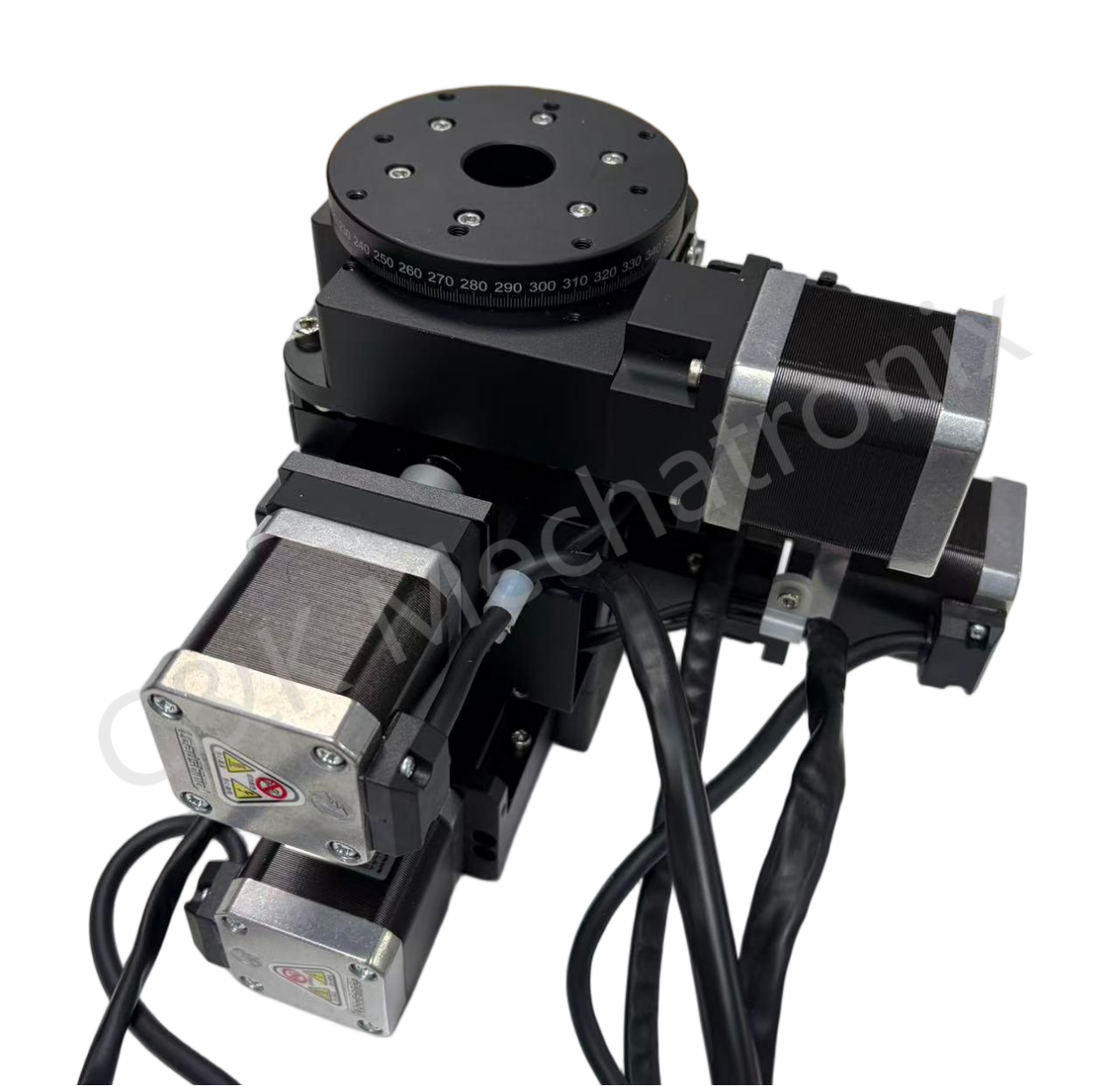
What Is Load Eccentricity? (And Why It Matters)
Load eccentricity means the center of gravity of your load is not on the rotation center of the stage. Simple. But the effects are not simple.
When you have a precision rotary stage, the bearings are designed to take loads in a certain way. If the load is centered, the force goes straight through the bearing raceways. If the load is offset, you get a moment load. That moment tries to tilt the stage. It creates uneven pressure on the bearings. It also increases torque ripple.
Let me give you some numbers. A typical high-load rotary stage might handle 500 kg centered. Add just 5 mm of eccentricity, and the effective load on one side can jump by 30% or more. At 10 mm eccentricity, bearing life can drop by 60% to 70%. That’s not a small issue. That’s a failure waiting to happen.
In heavy duty rotation alignment, eccentricity is even more critical. These applications often run 24/7. They face wind loads, vibration, and thermal changes. A small offset becomes a big problem fast.
So why does eccentricity happen? Usually three reasons:
The part is not symmetric.
The fixture is poorly designed.
The stage is mounted on an uneven surface.
We’ve seen all three. Many times.
How to Detect Load Eccentricity on a Precision Rotary Stage
You can’t fix what you can’t measure. Here are the tools we recommend.
|
Tool |
Accuracy |
Best For |
Cost |
|
Dial indicator |
±0.01 mm |
Basic runout check |
Low |
|
Laser tracker |
±0.005 mm |
Large stages |
High |
|
Strain gauge |
±1% load |
Dynamic load |
Medium |
|
Accelerometer |
±0.1 g |
Vibration analysis |
Medium |
|
Thermal camera |
±2°C |
Heat from friction |
Medium |
Start simple. Put a dial indicator on the edge of the load. Rotate the stage by hand. Watch the needle. If you see more than 0.02 mm of movement, you have eccentricity. Then add weight. Measure again. The difference tells you how bad it is.
For heavy duty rotation alignment, we suggest a laser tracker. It gives you a full picture. You can see tilt, radial runout, and axial runout at the same time.
One more tip: measure at operating speed. Static tests miss dynamic effects. A load that looks centered at rest can shift when spinning.
Top 5 Load Eccentricity Fix Methods
There is no single best fix. It depends on your load, your budget, and your precision needs. But here are five methods that work. We’ve used all of them.
1. Adjust the Mounting Position
This is the cheapest fix. Move the load until the center of gravity lines up with the rotation center. Use shims, slots, or adjustable plates. It takes time. But it costs almost nothing.
Best for: Prototypes, low-volume production, small offsets (under 3 mm).
2. Add Counterweights
Bolt a weight on the opposite side of the eccentric load. This balances the moment. It reduces bearing stress. It also smooths torque.
Best for: Radar antenna pedestal heavy duty rotation alignment, robotic arms, any asymmetric load.
3. Use an Auxiliary Support Bearing
Add a second bearing or a roller support under the load. This takes the moment load off the main precision rotary stage. It shares the force. It increases stiffness.
Best for: Very heavy loads (over 1,000 kg), large diameter stages.
4. Redesign the Fixture
Sometimes the fixture is the problem. A tall, narrow fixture amplifies eccentricity. A low, wide fixture reduces it. Use finite element analysis (FEA) to check. We offer this service to our customers.
Best for: New projects, high-volume production.
5. Choose a Stage with Higher Moment Capacity
This is the most expensive fix. But it’s also the most reliable. A precision rotary stage with preloaded angular contact bearings or a crossed roller bearing can handle more eccentricity. Direct-drive stages are often better than worm-gear stages here.
Best for: When you can’t change the load or the fixture.
Here’s a quick comparison table.
|
Method |
Cost |
Time |
Effectiveness |
Best For |
|
Adjust mounting |
Low |
1-4 hours |
60-80% |
Small offsets |
|
Counterweights |
Low-Med |
2-8 hours |
70-90% |
Asymmetric loads |
|
Auxiliary bearing |
Medium |
1-3 days |
85-95% |
Heavy loads |
|
Redesign fixture |
Medium-High |
1-4 weeks |
90-98% |
New designs |
|
Higher capacity stage |
High |
1-2 weeks |
95-99% |
Critical apps |
Remember: a good load eccentricity fix often combines two or three methods. Don’t rely on just one.
High-Load Precision Rotary Stage vs Heavy-Duty Rotary Table: Which One Handles Eccentricity Better?
This is a common question. Buyers often think “heavy-duty” means “better for heavy loads.” That’s not always true. Let’s compare.
| Feature | High-Load Precision Rotary Stage | Heavy-Duty Rotary Table |
| Load capacity | 200-5,000 kg | 500-20,000 kg |
| Eccentricity tolerance | Excellent (up to 20 mm) | Fair (up to 5 mm) |
| Positioning accuracy | ±2 arc-sec | ±30 arc-sec |
| Repeatability | ±1 arc-sec | ±10 arc-sec |
| Bearing type | Preloaded angular contact / crossed roller | Tapered roller / slewing bearing |
| Stiffness | Very high | High |
| Drive type | Direct-drive or servo | Worm gear or pinion |
| Cost | Higher | Lower |
| Best for | Precision alignment, radar, semiconductor | General rotation, welding, positioning |
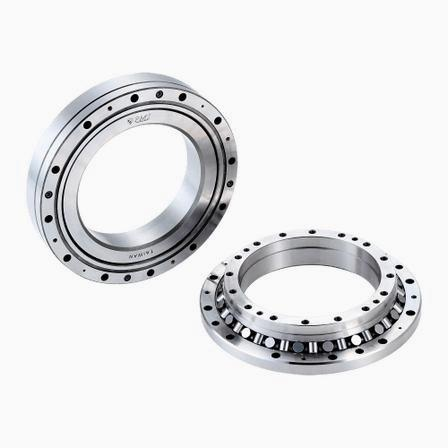
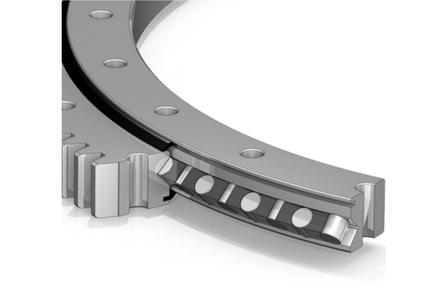
The key difference is bearing design. A high-load precision rotary stage uses bearings that are preloaded. They resist tilt. They keep the load centered. A heavy-duty rotary table often uses a slewing bearing. It can take huge axial loads. But it has more play. It doesn’t handle eccentricity well.
So if your application needs heavy duty rotation alignment with tight tolerances, go with the precision stage. If you just need to rotate a heavy object slowly, the rotary table is fine.
We build both. We can tell you which one fits. Just ask.
Real-World Application: Radar Antenna Pedestal Heavy Duty Rotation Alignment
Let me share a story. A customer came to us with a radar antenna pedestal. The antenna weighed 800 kg. Its center of gravity was 150 mm off the rotation axis. They were using a standard heavy-duty rotary table. It failed in 6 months. Bearings were shot. Accuracy was gone.
We recommended a high-load precision rotary stage with a crossed roller bearing. We also added a counterweight. And we designed a new mounting plate that lowered the center of gravity.
Result: The new system has been running for 3 years. No maintenance issues. Position accuracy is still within ±5 arc-sec. That’s radar antenna pedestal heavy duty rotation alignment done right.
This is not a rare case. We see it in robotic arm bases, satellite test turntables, and medical CT gantries. The fix is almost always the same: measure the eccentricity, then use a combination of counterweights and a better stage.
If you have a similar project, send us your load drawing. We’ll give you a free evaluation.
Related Question: How to Choose a Manual Linear Stage for High-Vacuum Laboratory Environments
We get this question a lot. It’s not directly about rotary stages, but it’s related. Many labs use both. So here’s a short guide.
How to choose a manual linear stage for high-vacuum laboratory environments comes down to three things: materials, lubrication, and adjustment.
Materials: Use stainless steel or anodized aluminum. Avoid brass or bronze. They outgas.
Lubrication: Use vacuum-compatible grease or dry film. Standard grease will evaporate and contaminate your chamber.
Adjustment: Use micrometer heads or differential screws. They give fine control without backlash.
Cleaning: Every part must be cleaned with solvent before assembly.
Testing: Bake the stage at 100°C for 24 hours. Then measure outgassing.
A good manual linear stage for vacuum costs 2-3 times more than a standard one. But it saves you from ruining a $50,000 experiment. We make these. We can help you specify one.
How to Choose the Right Precision Rotary Stage for Your Load
Here’s a step-by-step checklist. Use it before you buy.
Step 1: Calculate Your Load and Eccentricity
Weight: ______ kg
Center of gravity offset: ______ mm
Moment load: Weight × Offset = ______ kg·mm
Step 2: Define Your Accuracy Needs
Positioning accuracy: ______ arc-sec
Repeatability: ______ arc-sec
Max speed: ______ rpm
Step 3: Check the Bearing
Crossed roller: best for eccentricity
Angular contact: good for medium eccentricity
Slewing bearing: poor for eccentricity
Step 4: Choose the Drive
Direct-drive: high precision, high cost
Worm gear: high torque, lower precision
Manual: low cost, no power
Step 5: Consider the Environment
Vacuum: special materials
Cleanroom: low particle
Outdoor: IP rating
We have a selection table on our website. Or you can call us. We’ll walk you through it.
Maintenance Tips to Prevent Load Eccentricity Issues
Even the best load eccentricity fix needs maintenance. Here’s what we recommend.
Check mounting bolts every 500 hours. Torque to spec.
Re-measure runout every 1,000 hours.
Lubricate bearings every 2,000 hours. Use the right grease.
Inspect for wear every 5,000 hours. Replace bearings if needed.
Keep a log. Track changes over time.
One customer ignored maintenance for 2 years. Their precision rotary stage failed. The repair cost was 40% of a new unit. Don’t be that customer.
FAQ
Q: How much eccentricity is too much?
A: A good rule is less than 1% of the load width, or 2 mm, whichever is smaller. For heavy duty rotation alignment, keep it under 1 mm.
Q: Can I fix eccentricity without buying a new stage?
A: Yes. Counterweights and auxiliary bearings often work. But if the stage is already damaged, you may need a new one.
Q: Do you offer custom load eccentricity fix solutions?
A: Yes. We design counterweights, fixtures, and mounting plates. Send us your drawing.
Q: What is the lead time?
A: Standard stages: 2-3 weeks. Custom: 4-6 weeks.
Q: Do you ship worldwide?
A: Yes. We ship to over 30 countries.
Why Choose Us for Your Heavy Duty Rotation Alignment Needs?
We are not a trading company. We are a manufacturer. We have over 9 years of experience. We make manual and motorized linear stages. We make automated alignment platforms. We make precision rotary stages for the toughest jobs.
Here’s what you get when you work with us:
Free application review
3D models for your design
Custom load eccentricity fix engineering
Testing before shipment
12-month warranty
Fast response. Usually within 24 hours.
Don’t guess. Don’t hope. Get the right stage for your load.
Contact us today. Send your load weight, eccentricity, and accuracy needs. Our engineers will recommend the best precision rotary stage for your heavy duty rotation alignment project. We’ll also tell you if a high-load precision rotary stage vs heavy-duty rotary table is the better choice for your budget.
Email: sales01@dck-gd.com
Phone: +86-180-2758-2086
Website: www.dgchengkun.com
Conclusion
Load eccentricity is not a small problem. It causes vibration, wear, and lost accuracy. But it is fixable. The best load eccentricity fix combines measurement, counterweights, and the right stage. For heavy duty rotation alignment, always choose a precision rotary stage with high moment capacity. Compare high-load precision rotary stage vs heavy-duty rotary table carefully. And don’t forget related questions like how to choose a manual linear stage for high-vacuum laboratory environments.
We’ve helped hundreds of customers solve these problems. We can help you too. Reach out. Let’s make your rotation smooth, accurate, and reliable.
Post time: Sep-15-2026


