

You have a precision alignment task. The budget is tight. You start researching and quickly hit the big question: How do I make the right motorized stage motor choice when balancing the initial cost of a stepper motorized stage against the long-term performance benefits of a servo linear stage? You’re not alone. Every week, we get calls from engineers and procurement managers who are stuck on this exact point. After over 9 years of manufacturing manual and motorized positioning stages, we’ve seen both technologies shine – and disappoint. This post gives you a straightforward, no-nonsense look at what really matters for your wallet and your project.
Understanding the Two Players
Before we talk money, let’s get the basics straight. Both a stepper motorized stage and a servo linear stage do the same job: they move a load along a linear path with high precision. But how they do it is very different.
A stepper motorized stage uses a motor that rotates in fixed, small steps. You send a pulse, the motor moves one step. No feedback is needed in most designs, so the control system stays simple. Think of it like a reliable digital clock – it counts steps and assumes it’s at the right position.
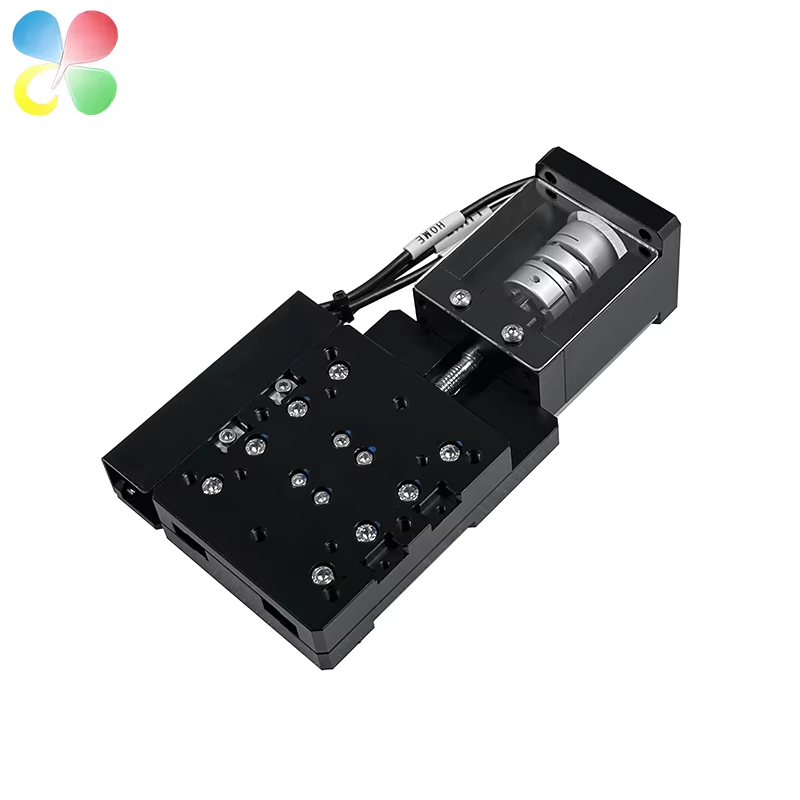
A servo linear stage uses a servomotor coupled with an encoder. The encoder constantly reports the actual position back to the drive. This closed-loop system adjusts in real time. It’s more like a GPS-guided car that corrects its route every millisecond.
Both have their place. The real trick is matching the technology to what you actually need – and what you’re willing to spend.
Key Performance Differences That Hit Your Budget
Cost isn’t just the purchase price. It’s total cost of ownership. We always tell our clients to look at five areas: initial price, integration effort, energy use, maintenance, and downtime risk. Let’s break it down with a comparison table we use internally to help customers make the right motorized stage motor choice.
| Feature | Stepper Motorized Stage | Servo Linear Stage |
| Typical initial cost (per axis) | $700 – $2,800 | $1,500 – $7,000+ |
| Positional accuracy | ±5 to ±25 µm (open loop) | ±1 to ±10 µm (closed loop) |
| Repeatability | ±2 to ±5 µm | ±0.3 to ±2 µm |
| Maximum speed under load | 200 – 500 mm/s | 800 – 2,000 mm/s |
| Torque at high speed | Drops off significantly | Holds steady across range |
| Holding torque at standstill | High (full current) | Low (uses just enough) |
| Energy consumption | Constant current draw, even when idle | Draws power proportional to demand |
| Drive & controller cost | Lower; simple pulse/direction drives | Higher; needs tuning and more setup |
| Maintenance | Very low; no encoder to clean | Low; encoder needs occasional checks |
| Best when | Load is constant, speed is moderate, budget is tight | Load varies, speed matters, process can’t miss a step |
Right away, you can see why we never say one is “better.” It depends.
Real Numbers: What Stepper and Servo Stages Actually Cost
Let’s put some concrete numbers on the table. These are ballpark figures based on the standard manual and electric linear stages we produce. Custom strokes, cleanroom prep, or multi-axis systems will shift these numbers, but they give you a realistic starting point.
A basic single-axis stepper motorized stage with a 100 mm travel, standard ball screw, and a NEMA 17 stepper typically lands between $800 and $1,500. If you need a longer travel, say 300 mm, and a larger NEMA 23 motor, the price can climb to $2,200–$2,800. The matching stepper drive might cost you another $150–$350.
Now look at a comparable servo linear stage. A single-axis unit with 100 mm travel, a ground ball screw, and a 100W AC servomotor with encoder usually starts around $1,800 and can reach $4,000 when you factor in a higher-grade linear guide. For a 300 mm travel with a 200W servo, expect $3,500 to $6,500. A servo drive adds another $400–$900 per axis.
Right at the procurement stage, a servo system can cost 1.8 to 3 times more than a stepper equivalent. That’s a huge number when you’re building a 4-axis or 6-axis alignment station for budget-sensitive precision alignment automation.
But the initial number isn’t the whole story. A stepper motorized stage saves you cash upfront, yet if you start missing steps because your load changed, that “saving” evaporates in scrapped parts. A servo linear stage hurts the wallet now, but the closed-loop feedback means you don’t get surprise positioning errors. If your assembly line runs 24/6, that reliability difference pays back fast.
Where Each Motorized Stage Motor Choice Shines
Let’s move from theory to the shop floor. Here are real-world patterns we’ve observed over almost a decade of supplying manual and motorized positioning stages for alignment tasks.
When a stepper motorized stage is the smarter buy:
Your load is predictable and doesn’t change much.
Travel speeds stay below 400 mm/s.
You can accept a positional tolerance of ±10 µm or looser.
The motion profile is simple: move, settle, do the job, move back.
You want a “set it and forget it” system with no tuning.
You’re prototyping or building a low-volume test rig.
A concrete example: a lab at a university needed an XY stage for aligning microscope objectives. The load never changed. Speed wasn’t critical. They picked a stepper motorized stage with microstepping, got 5 µm repeatability, and saved enough money to buy a second unit.
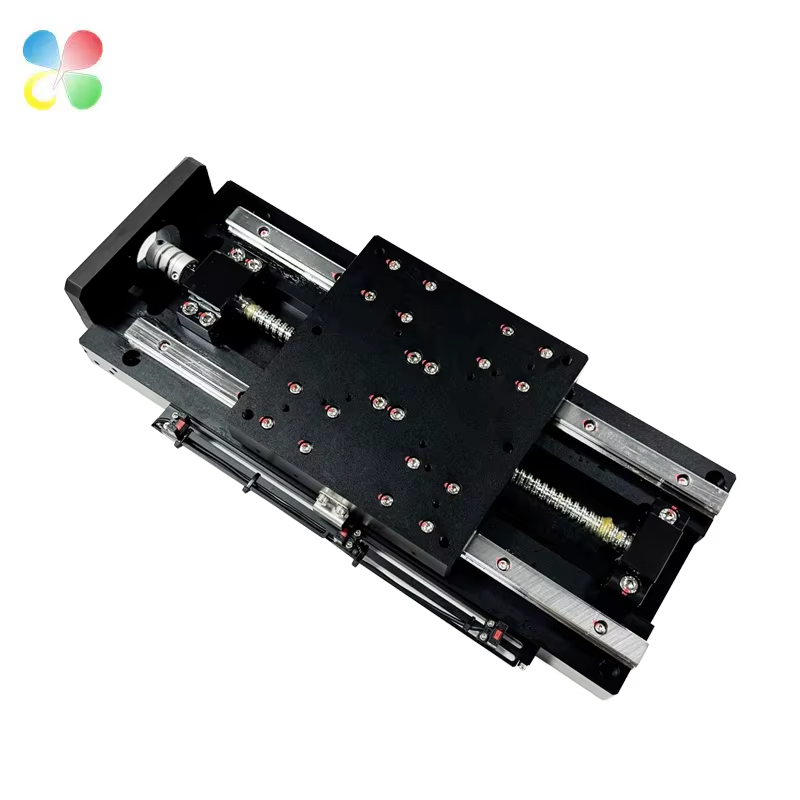
When you should stretch the budget for a servo linear stage:
Load can vary, for example, when picking up different parts.
Speed is essential – you need 600 mm/s or more to hit takt time.
You can’t afford a lost step; if the stage drifts, the process fails instantly.
The motion is dynamic, with lots of starts, stops, and force changes.
You need smooth velocity control for processes like laser marking or dispensing.
One of our customers in medical device assembly does high-speed dispensing on a moving stage. They use a servo linear stage because any speed ripple would ruin the bead size. The higher upfront spend saves them thousands in rework every month.
This is exactly what budget-sensitive precision alignment automation means: you weigh the cost of risk against the cost of hardware. In some cases, the cheaper stage is the true low-cost winner. In others, it’s an expensive gamble.
Stepper Motorized Stage vs. Servo Linear Stage Selection Guide
We promised practical help. Here is a simple decision flow you can use as your personal Stepper Motorized Stage vs. Servo Linear Stage Selection Guide.
Define your peak speed requirement.
If it’s below 450 mm/s and you don’t need high acceleration → Stepper works.
If it’s above 500 mm/s or you need fast ramp-up → Servo is safer.
Check your positioning tolerance.
If ±15 µm is fine → A good stepper motorized stage will do the job.
If you need ±5 µm or tighter under dynamic conditions → Servo linear stage, no question.
Assess load variation.
Constant load, known mass → Stepper can handle it.
Load changes during operation → Servo, because the closed loop adjusts torque instantly.
Calculate the cost of a positioning failure.
If a lost step just means a quick re-home and no scrap → Stepper risk is acceptable.
If a missed step destroys a $200 part or stops a line for an hour → Invest in a servo linear stage.
Look at your engineer’s tuning skills.
Stepper systems are often plug-and-play. Servo drives need tuning. If you lack in-house motion expertise, the simplicity of a stepper motorized stage might save you a lot of integration headaches. But we can always help with that – more on that later.
Count the axes.
The cost gap multiplies. A 4-axis stepper setup vs. a 4-axis servo setup can be a $8,000 difference. If all four axes just do simple positioning, that extra money could go into better tooling.
This Stepper Motorized Stage vs. Servo Linear Stage Selection Guide isn’t about pushing one technology. It’s about knowing where to spend and where to save. And you can always loop us in to double-check your logic.
A Deeper Look at the Motorized Stage Motor Choice
Choosing the motor for your linear stage is rarely isolated. You also pick the drive, the leadscrew, and the guide system. We often ask customers three extra questions to solidify their motorized stage motor choice.
What is the duty cycle?
A stepper draws current to hold position. In a system that stays idle but powered, that’s wasted energy. If you go stepper, consider a drive that reduces current at idle. Servos are naturally more efficient here.
Do you need absolute position on power-up?
Most stepper systems wake up and need a home sequence. Some servo systems with absolute encoders remember where they are. If homing is a problem for your process, that feature alone can justify a servo linear stage.
Is the environment clean?
Steppers are robust. They tolerate a bit of dust and don’t have an optical encoder that can get contaminated. In a less-than-perfect factory environment, a stepper motorized stage often outlasts a poorly sealed servo unit. We make both types with covers and seals, but the physics remain: no encoder, one less sensitivity.
Remember the long-tail question we started with? How do I make the right motorized stage motor choice when balancing the initial cost of a stepper motorized stage against the long-term performance benefits of a servo linear stage? The answer lies in those three factors: duty cycle, homing needs, and environment. Only you have that shop-floor knowledge.
Budget-Sensitive Precision Alignment Automation in Practice
We often build positioning platforms for automated alignment tasks: LCD bonding, lens centering, wafer probing, and PCB drilling. These applications are screaming examples of budget-sensitive precision alignment automation. They need micron-level results, but not every station can afford a $15,000 air-bearing servo stage.
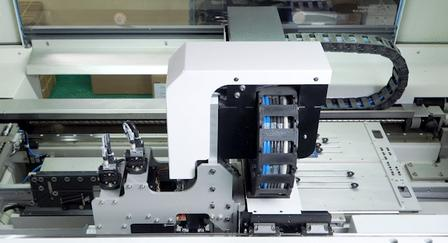
One of our most popular solutions for this niche pairs a stepper motorized stage for coarse XY movement with a manual fine-adjustment stage on top. The motorized stage gets you within 20 µm fast and cheap, then the operator or a piezo element dials in the final few microns. This hybrid approach has saved many of our clients 40–60% compared to a full servo multi-axis system.
In a recent project, a solar panel manufacturer needed to align stringers. They were ready to buy a full servo linear stage for every station. After talking with us, they tested a stepper motorized stage on the less critical feed axis and kept the servo linear stage on the fast-cycling placement head. The result: a 33% reduction in per-station cost and zero loss of throughput. That’s what smart motorized stage motor choice is all about.
A Quick Word on Manual Stages
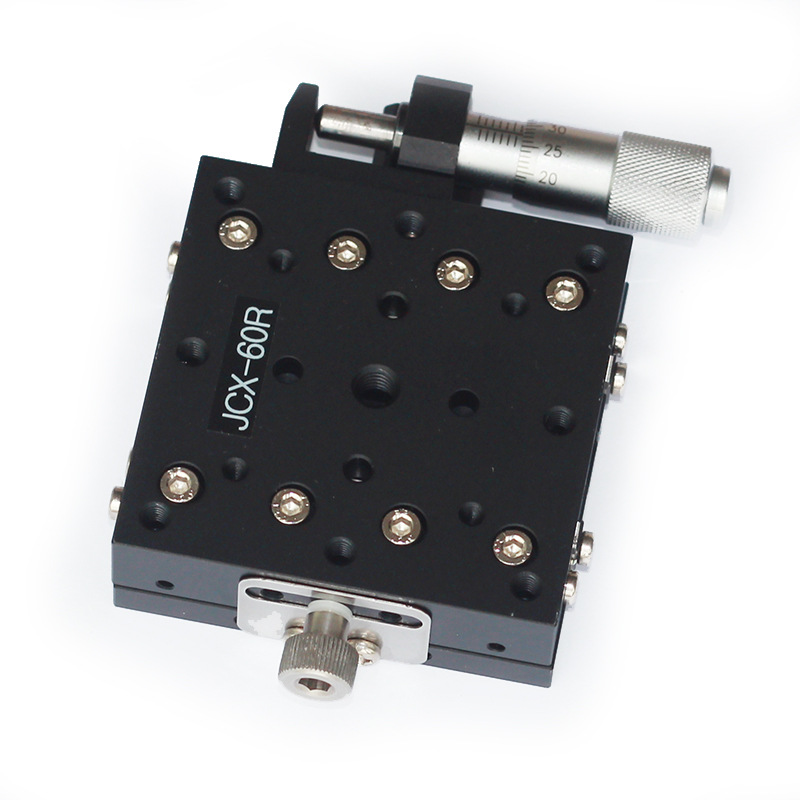
Not every task needs a motor. We’ve been producing manual linear stages and rotary stages for 9 years. Sometimes, combining a manual stage for setup with a single motorized axis gives the best budget-to-performance ratio. If you’re in a lab or doing low-volume production, don’t over-automate. A precise manual stage with a micrometer head can hold 3 µm repeatability and costs a fraction of any stepper motorized stage or servo linear stage. Our application engineers can help you draw that line.
Why Our Experience Matters for Your Decision
With nearly a decade of designing manual and motorized linear stages, we’ve learned that spec sheets don’t tell the whole story. Real-world testing does. We invite you to send us your application details – load, speed, accuracy, environment, and target budget. We’ll recommend a concrete stage configuration, not just a generic product.
Still not sure about your motorized stage motor choice? Let’s talk. You can reach our engineering support directly through the contact form on this page, or email us at [your sales email]. We reply within one business day, and we often share CAD files so you can see exactly how our stepper motorized stage or servo linear stage will fit into your machine.
A Simple Summary Table for Your Wall
Print this out. Pin it up. It captures the gut-level tradeoffs for budget-sensitive precision alignment automation.
| Decision Driver | Go Stepper Motorized Stage | Go Servo Linear Stage |
| Budget per axis | Under $2,000 | Over $2,500 |
| Top speed needed | Below 400 mm/s | Above 600 mm/s |
| Position risk cost | Low (easy re-home) | High (scrapped part) |
| Load variability | Constant | Variable |
| Control complexity | Must be simple | Tuning OK |
Let’s Build the Right Motorized Stage Together
We designed this blog to give you the confidence to make your own Stepper Motorized Stage vs. Servo Linear Stage Selection Guide decision. But every application has quirks. That’s where a 10-minute call with our team can save you thousands of dollars and weeks of headache. Whether you end up choosing a rugged stepper motorized stage, a high-performance servo linear stage, or a clever mix of both, we manufacture all of them in-house and stand behind every unit.
Reach out now. Tell us about your motion project. We’ll help you nail the motorized stage motor choice so you get exactly the accuracy you need – and not a dollar more than you should spend.
Post time: Aug-17-2026


