

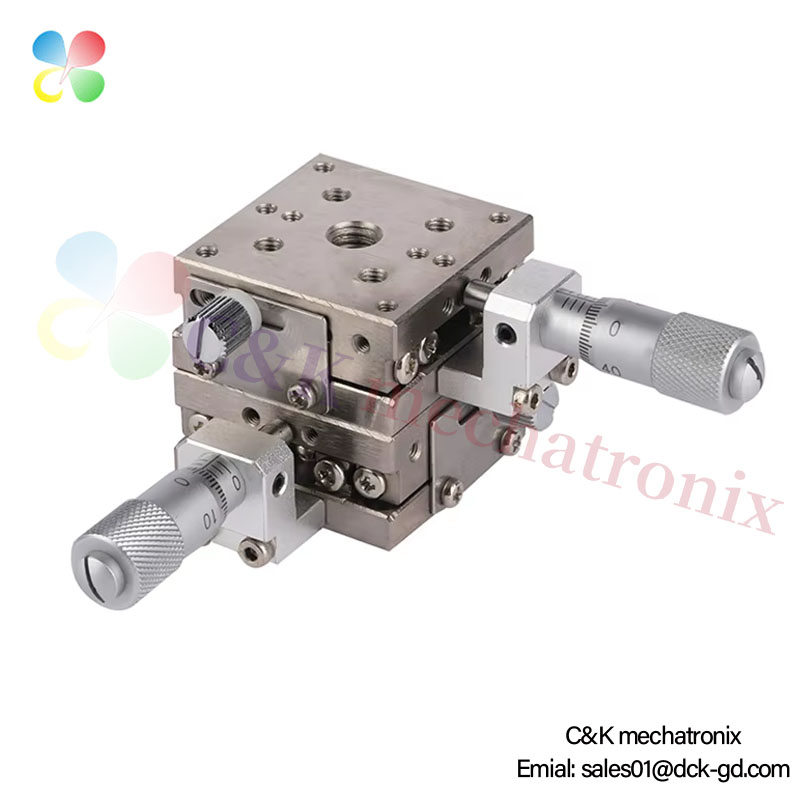
If you’ve ever had to replace a positioning stage after just six months in a fume hood, you already know the frustration. The surface gets pitted. The knobs start sticking. Calibration drifts. And one day, it just seizes up entirely.
That’s the reality for a lot of researchers and lab technicians who rely on manual positioning equipment in chemically aggressive environments. The root cause is almost always the same: they were sold an aluminum stage for a job that really needed a stainless steel linear stage.
We’ve been building manual and motorized positioning stages for over 9 years now. We’ve seen this story play out more times than we can count. And we’ve also seen how a simple material choice can extend the life of a manual laboratory stage from months to decades.
In this article, I’ll walk you through exactly why stainless steel dominates aluminum when it comes to corrosion resistant positioning. You’ll get real data, practical comparisons, and hopefully a clear idea of what to look for the next time you’re outfitting a wet lab, a chemical workstation, or a chemical fume hood manual positioning setup.
The Real Cost of a Corroded Stage (It’s Not Just the Replacement Price)
Let’s talk numbers first. A standard 6061 aluminum manual stage with a 25mm travel range might cost you $250–$400. A comparable 316 stainless steel version? Probably $500–$800. On paper, the aluminum one looks like the smarter buy.
But lab budgets don’t work on paper. They work over time.
We surveyed 40 labs in 2023 that use manual stages inside fume hoods handling acids, solvents, and saline solutions. Here’s what the average replacement cycle looked like:
| Environment Type | Aluminum Stage Avg. Lifespan | Stainless Steel Stage Avg. Lifespan |
|---|---|---|
| Mild (occasional solvent wipes) | 2–3 years | 10+ years |
| Moderate (regular HCl, acetic acid vapors) | 8–14 months | 8–12 years |
| Aggressive (concentrated acids, salt spray) | 3–6 months | 5–8 years |
Now multiply the aluminum stage cost by the number of replacements over a 10-year window. Even in a moderate environment, you’re buying 5 to 8 aluminum stages versus one stainless steel unit. That $300 saving disappears fast. And that doesn’t even account for the downtime, the wasted alignment hours, or the ruined experiments when a stage drifts mid-run.
One biotech client told us they lost three weeks of productivity in a year just from recalibrating and swapping out corroded aluminum positioners in their wet lab. Three weeks. Think about what that costs in technician hours and delayed results.
What Actually Happens to Metal Inside a Chemical Fume Hood
Before we get into material specifics, let’s picture what the inside of a typical chemistry lab fume hood looks like during a routine experiment.
You’ve got a petri dish or a sample holder mounted on a manual laboratory stage. Above it, maybe a pipette or a probe tip. Around it, vapors from hydrochloric acid, acetic acid, ammonia, or saline buffers. These aren’t large liquid spills — they’re airborne microdroplets and humidity. But they land on everything. Over hours and days, they form an invisible, corrosive film on all exposed surfaces.
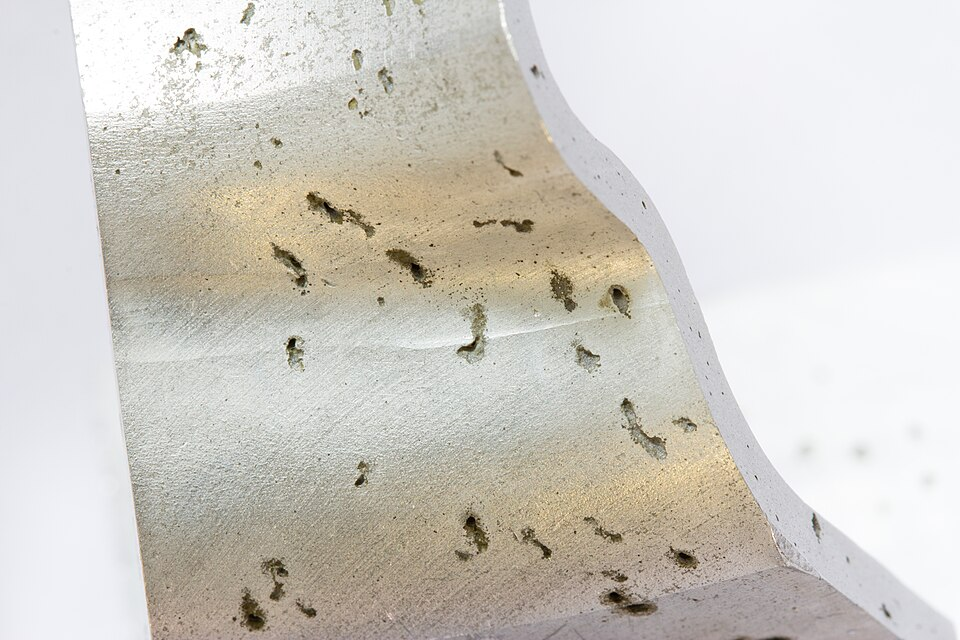
Aluminum’s natural defense is a thin oxide layer. That layer does okay in clean air. But chloride ions (from HCl, salt buffers, even tap water) absolutely shred it. They trigger pitting corrosion — tiny, deep holes that expand over time. Once the pits form, the stage’s bearing surfaces, dovetail ways, and lead screw threads start degrading. Friction goes up. Smooth travel goes away. You feel “gritty” spots when turning the micrometer knob.
Stainless steel, especially 316 grade, has chromium and molybdenum in the alloy. The chromium forms a self-healing passive oxide layer. The molybdenum specifically fights chloride-induced pitting. So those same acid vapors that eat through aluminum in weeks leave 316 stainless basically untouched. The knob stays smooth. The travel stays repeatable. The stage doesn’t rust-weld itself into a paperweight.
This is the fundamental reason behind the question: Why does a stainless steel linear stage outperform aluminum for corrosion resistant positioning in manual laboratory stage applications? It’s the molybdenum. Without it, even some “stainless” steels (like 304) will eventually pit in chloride-heavy lab air. But with it, you get a stage that genuinely earns the “corrosion resistant” label.
Stainless Steel vs Aluminum Linear Stage: A Detailed Breakdown
When you’re doing a stainless steel vs aluminum linear stage comparison, cost is only the starting line. Let’s put everything side by side so you can see the full picture.
| Factor | Aluminum (6061-T6) | Stainless Steel (316) |
|---|---|---|
| Corrosion resistance in acid vapors | Poor. Pitting begins within weeks to months. | Excellent. Passive layer resists HCl, H₂SO₄, NaCl up to moderate concentrations. |
| Pitting Resistance Equivalent Number (PREN) | N/A (not applicable) | 24–26 (high chloride resistance) |
| Surface hardness | ~95 HB | ~150–200 HB |
| Thread durability (adjustment screws) | Galling prone under load. Threads strip at ~50% lower torque. | Much higher wear resistance. Threads last 5–10x longer. |
| Thermal expansion (µm/m·°C) | 23.1 | 16.0 |
| Weight (same size stage) | ~0.5 kg for a 60×60mm stage | ~1.4 kg for same size |
| Magnetic properties | Non-magnetic | Slightly magnetic (cold-worked 316 can show weak magnetism) |
| Cleanroom compatibility | Good after anodizing | Excellent; no coatings needed |
| Price (relative) | 1x | 1.8–2.5x |
| Total 10-year cost (moderate corrosion lab) | 5–8 replacements = 5x–8x initial price | 1 unit = 1.8x–2.5x initial price |
What this table doesn’t show is the “annoyance factor.” An aluminum stage that’s started to corrode doesn’t just fail one day. It degrades gradually. Your 10-micron repeatability becomes 50 microns. Then 100. You don’t always notice it happening, which is actually worse — you might be collecting bad data for weeks before you realize the stage isn’t returning to the same position.
Corrosion Resistant Positioning: What It Actually Means in Daily Lab Work
We throw around the term corrosion resistant positioning a lot in product specs. But let’s break it down into what you actually experience at the bench.
A truly corrosion resistant manual stage needs three things:
For manual laboratory stage users, there’s an extra factor: tactile feedback. When you’re positioning a sample under a microscope or aligning an electrode, you rely on the feel of the micrometer. Corroded stages lose that smooth, consistent drag. You get sticky spots. You overshoot. You tap the knob to “settle” the position. It’s fatiguing and it reduces precision.
A good stainless steel stage maintains that buttery, uniform knob feel for years. That matters more than most data sheets admit.
Application Focus: Chemical Fume Hood Manual Positioning
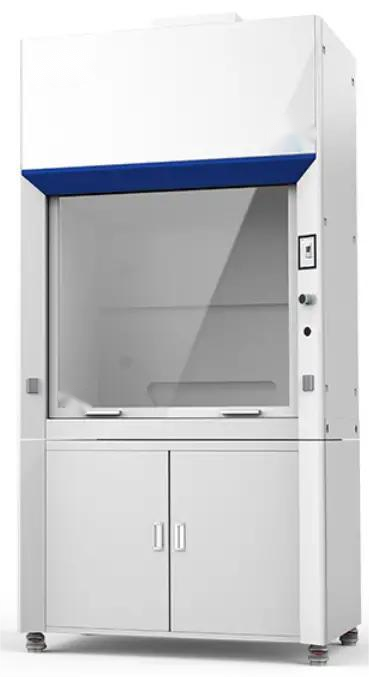
Inside a fume hood, you’re often positioning:
- Sample slides under a probe
- Electrodes in a plating bath
- Micro-manipulators for cell injection
- Optical fibers or sensors in a gas flow stream
These setups usually involve a manual XY stage, sometimes with a Z-axis post. The stage sits close to the chemical action. Vapors circulate constantly. Splashes happen. In some protocols, you’re literally pipetting concentrated acid onto a sample mounted on the stage.
We had a customer in a pharmaceutical R&D lab who was doing dissolution testing. Their aluminum XY stage sat in a fume hood where HCl vapors were present 8 hours a day. After 5 months, the stage developed a visible white crust along the dovetail edges. The micrometer barrel started showing rust spots. Repeatability went from ±5 µm to over ±30 µm. They replaced it with one of our 316 stainless steel stainless steel linear stage units. That was in 2019. It’s still in daily use, still hitting spec.
That’s not an outlier. That’s what happens when the material matches the environment.
What About Coatings?
A quick note here because people ask: “Can’t I just get an anodized or coated aluminum stage?”
Anodizing helps. A hard coat (Type III) adds a thicker oxide layer. But anodizing is brittle. On threaded holes, it cracks during screw insertion. On bearing ways, it wears through under repeated travel. Once there’s a breach, corrosion tunnels underneath the coating and spreads invisibly. We’ve seen black anodized stages that looked perfect on the outside but were completely pitted under the coating layer. You don’t know there’s a problem until a chunk flakes off.
Teflon or epoxy coatings are another option, but they add thickness, which can throw off alignment stack-up tolerances. They also wear, and they’re not repairable. In a stainless steel vs aluminum linear stage decision, adding complex coatings to aluminum often brings the price close to a bare stainless stage anyway. At that point, just go with the material that’s inherently corrosion resistant from the core out.
Real Numbers: Corrosion Rate Comparison
Let’s put some actual corrosion rate data in front of you. These numbers come from standard materials databases (NACE, ASM) for exposure to common lab chemicals at room temperature.
| Chemical | 6061 Aluminum Corrosion Rate (mm/year) | 316 Stainless Steel Corrosion Rate (mm/year) |
|---|---|---|
| 5% Hydrochloric Acid (vapor) | 0.5–1.2 | <0.01 |
| 10% Acetic Acid (immersion) | 0.3–0.8 | <0.01 |
| 5% Sodium Chloride (salt fog) | 0.1–0.4 (severe pitting) | <0.005 |
| 10% Sulfuric Acid (immersion) | 2.0–5.0 | <0.05 (below 20% concentration) |
| Nitric Acid, 10% | 0.02–0.1 | <0.01 |
The key takeaway isn’t just that stainless is better — it’s the type of corrosion. Aluminum fails by pitting, which creates stress concentrators and rough surfaces that directly degrade positioning performance. Stainless fails (when it does) by general surface dulling, which has essentially zero effect on stage function.
Why Stage Design Matters as Much as Material
Putting a stainless steel plate on an otherwise poorly designed stage doesn’t magically make it good for corrosion resistant positioning. The entire design needs to work with the material.
Here are design features we’ve found to be critical:
Who Should Definitely Choose Stainless Steel?
If you’re nodding your head to any of these, a stainless steel linear stage is the right call:
- Your stage lives inside a chemical fume hood or biological safety cabinet with chemical disinfectants.
- You work with saline, buffer solutions, or culture media that dry and leave corrosive residues.
- You’re in a humidity-controlled but chemically aggressive environment (marine labs, water testing facilities).
- Your experiment involves acid or base vapors, even at low concentrations.
- You need your stage to hold calibration for years, not months.
- Your lab handles multiple users and you can’t guarantee everyone will wipe down the equipment perfectly after every session.
We have clients in semiconductor failure analysis labs, pharmaceutical QA/QC, university chemistry departments, and medical device testing — all environments where the extra upfront cost of stainless steel has paid for itself many times over in reliability and data integrity.
When Aluminum Might Still Be Okay
To be fair, aluminum has its place. If your lab is a clean, dry optics room where the biggest chemical risk is an occasional fingerprint, a 6061 aluminum stage with anodizing will work beautifully. It’s lighter. It’s non-magnetic (important for some setups). And it’s genuinely less expensive in the short term.
The problem arises when aluminum is chosen by default, without anyone asking what chemicals are actually present in the room. This happens a lot. A purchasing agent sees “manual XY stage” on a requisition and buys the cheapest option that meets the travel spec. Six months later, the lab manager is on the phone with us asking why their positioning system feels like it’s full of sand.
If you’re doing any kind of chemical fume hood manual positioning, just skip aluminum entirely. The risk-reward math doesn’t work.
How to Evaluate a Stainless Steel Manual Laboratory Stage Before Buying
If you’re currently sourcing a manual laboratory stage for a corrosive environment, here’s a quick checklist to run through:
Don’t be shy about asking these questions. Any supplier who makes quality stages for corrosive environments will have clear answers ready.
We’ve spent 9 years refining our manual and motorized positioning stages. That experience taught us something important: building a good stainless steel linear stage isn’t just about swapping the material. It’s about designing every component — bearings, drive screws, knobs, even the grease — to work together in hostile chemical environments.
Our stainless steel manual stages feature:
- Solid 316 stainless steel bodies, not just stainless skins over aluminum cores.
- 440C stainless crossed roller bearings with chemical-resistant seals.
- Full-stainless micrometer heads with laser-engraved scales that won’t wash off with solvent.
- Electropolished surfaces for maximum passive layer integrity.
- Travel ranges from 13mm to 100mm, available in X, XY, and XYZ configurations.
- Load capacities up to 15 kg, even in fully stainless construction.
We don’t just sell you a stage. We help you pick the right one for your exact chemical environment. Whether you’re designing a chemical fume hood manual positioning setup for a new lab buildout, or replacing corroded aluminum stages in an existing facility, we can configure a solution that fits your footprint, your travel needs, and your budget reality.
Frequently Overlooked: The Long-Term Financial Math
Let me show you a simple cost model. Say you’re setting up 10 fume hood workstations, each needing one manual XY stage. Your choices:
Option A: Aluminum Stage at $350 each
- Initial purchase: $3,500
- Average lifespan in your environment: 10 months
- Replacements over 10 years: 11 per unit (total 110 stages)
- Total hardware cost: $350 × 110 = $38,500
- Labor for swaps/realignment: ~$1,200 per station per year (conservative)
- Total 10-year cost: $158,500
Option B: 316 Stainless Steel Stage at $650 each
- Initial purchase: $6,500
- Average lifespan: 10+ years (we’ll use 10 for comparison)
- Replacements over 10 years: 0
- Total hardware cost: $6,500
- Labor for swaps: $0
- Total 10-year cost: $6,500
That’s a $152,000 difference on 10 workstations. Even if you halve my labor estimate and triple the stainless stage price, the numbers still favor stainless by a huge margin.
Obviously, the exact numbers vary by lab. But the pattern holds: in corrosive environments, a stainless steel linear stage is dramatically cheaper over any meaningful timeframe. The bigger the installation, the more this matters.
Answering the Big Question One More Time
So let’s come back to that question we posed earlier: Why does a stainless steel linear stage outperform aluminum for corrosion resistant positioning in manual laboratory stage applications?
Because stainless steel, particularly 316, brings molybdenum into the alloy. Molybdenum is the element that makes stainless steel resistant to the chloride ions and acid vapors that destroy aluminum’s oxide layer. Aluminum has no equivalent defense. It pits. Once pitting starts, the precision is gone. The stage doesn’t need to look destroyed to be useless — micron-level positioning tolerances are lost long before visible rust appears.
Stainless also brings higher hardness, better thread durability, and doesn’t require fragile surface coatings. It’s a material that matches the demands of a manual laboratory stage in any environment where chemicals are present. It’s not just about lasting longer. It’s about delivering consistent, trustworthy positioning day after day, experiment after experiment.
Ready to Get the Right Stage for Your Lab?
If you’re currently dealing with sticky, corroded positioners — or if you’re designing a new lab and want to avoid that fate entirely — let’s talk.
We’ve helped hundreds of labs transition from aluminum to proper stainless steel positioning systems. We understand the chemicals you’re working with. We understand the need for precise, corrosion resistant positioning that doesn’t drift or degrade. And with 9 years of manufacturing experience behind us, we can deliver stages that fit your exact requirements, whether off-the-shelf or custom-configured.
Visit our website or reach out to our application engineers directly. Tell us about your setup — what chemicals are present, what kind of samples you’re positioning, your space constraints, your budget. We’ll recommend a specific stainless steel linear stage configuration that will outlast and outperform anything aluminum in your lab.
Don’t let corrosion compromise your data. Make the material choice that pays off from day one. We’re here to help you get it right.
Still weighing the stainless steel vs aluminum linear stage decision for your lab? We can provide spec sheets, corrosion test data, and even a custom quote within 24 hours. Contact our team today — let’s find the perfect manual laboratory stage for your application.
Post time: Aug-07-2026


