

If you work in optical alignment, semiconductor inspection, or R&D laboratory setup, you already know the challenge. You need repeatable positioning. You need stability. But you don’t always need a motorized system. A well-built multi axis manual stage setup can do the job. The question we hear often is: How Can You Build a Reliable Multi-Axis Manual Stage System Using Standard XY and XYZ Linear Stage Assemblies?
We will answer that here.
We have been manufacturing manual and motorized stages for more than 9 years. We see engineers overcomplicate this. They either stack too many single-axis stages without checking stiffness, or they jump to a custom quote too early. In this guide, we will show you how to use standard XY manual positioning stage units and XYZ linear stage assembly parts to get a solid setup. No fluff.
Why a Multi Axis Manual Stage Still Makes Sense
Manual stages are not obsolete. For tasks like microscope positioning or fiber optic testing, your hands give you feedback. You feel when a stage binds. You can make fine adjustments with a micrometer. You don’t need software, cables, or drivers. That means fewer failure points.
We have sold standard manual stages into semiconductor inspection lines where the goal is quick, tool-driven alignment. A multi axis manual stage with good locks can hold position for hours. It costs less than motorized. It is also easier to service.
But there is a catch. A stack of manual stages can become wobbly if you don’t secure the joints. That’s what we will focus on.
What Is an XY Manual Positioning Stage?
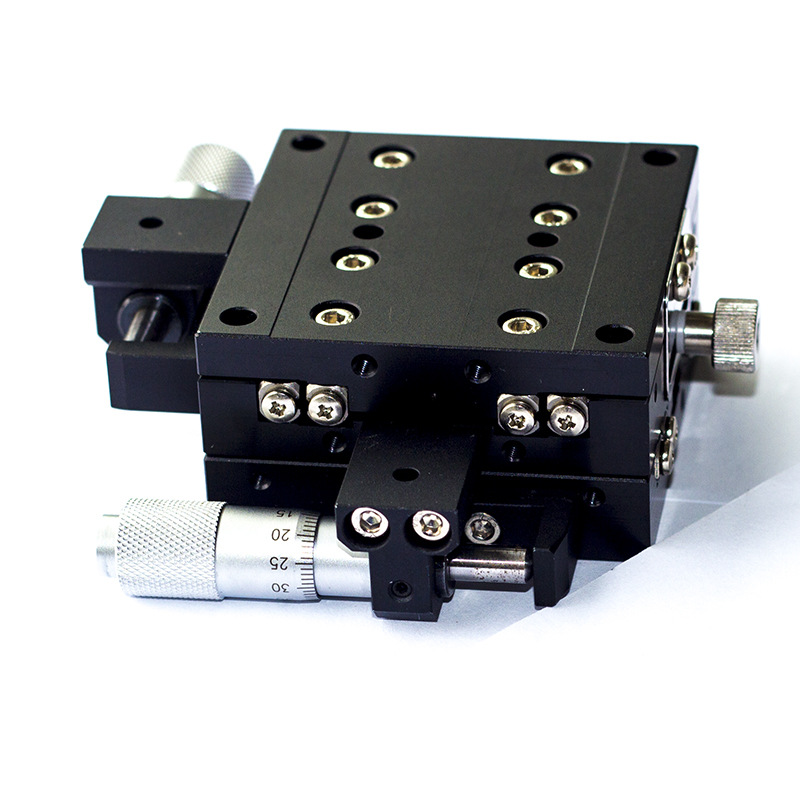
An XY manual positioning stage combines two linear axes in one compact block. The bottom axis moves one direction. The top axis moves perpendicular. You adjust each axis with a micrometer or fine screw. This is the workhorse for optical alignment and precision metrology.
A standard XY manual positioning stage usually has:
Two adjustment screws
Crossed roller bearings or ball bearings
A top mounting surface with tapped holes
A base with counterbores or through holes
Travel can be 6.5 mm, 13 mm, 25 mm, or 50 mm per axis. Load capacity depends on bearing type and body size. A 40 mm x 40 mm XY stage may support 3-5 kg. A 60 mm x 60 mm unit may support 8-10 kg. A 100 mm x 100 mm unit may support 15-20 kg.
What Is an XYZ Linear Stage Assembly?
An XYZ linear stage assembly adds vertical travel. You can build it by stacking a Z-axis stage on top of an XY manual positioning stage. Or you can buy a preassembled XYZ linear stage assembly from a manufacturer like us.
The preassembled route is often stiffer. The factory aligns the axes. They use precision dowel pins and calibrated plates. You get a flat, square base. That matters for R&D laboratory setup where setup time is short.
The Real Cost of a Wobbly Multi Axis Manual Stage
Let’s be honest. A loose stack will cost you more in the long run.
Here’s what we see:
Drift during measurements
Lost time re-zeroing
Damaged optics from sudden movement
Poor repeatability in precision metrology
Frustrated lab staff
A customer once used thin shims to stack three single-axis stages. The total stack height was 85 mm. Every time they locked the Z-axis, the XY manual positioning stage shifted by 12 µm. That might sound small. But in fiber optic testing, 12 µm is the difference between alignment and no signal.
Don’t let that happen to you.
Standard vs. Custom-Configured
This is a big decision. We tell customers: start with standard. A standard XY manual positioning stage or XYZ linear stage assembly is usually in stock or short lead time. Custom-configured stages take longer and cost more. They make sense only when travel, load, or envelope size cannot be met.
Here is a simple table.
Table 1: Standard vs. Custom-Configured Multi Axis Manual Stage
| Factor | Standard | Custom-Configured |
| Lead time | 3-10 days | 2-4 weeks |
| Cost | Lower | Higher |
| Proven reliability | High | Depends on design |
| Flexibility | Limited to catalog | High |
| Best for | Optical alignment, R&D lab | Unique envelope or load |
For most optical alignment and semiconductor inspection tasks, a standard stage works. If you need a special top plate pattern, we can often modify a standard stage with adapter plates. That keeps cost down.
Single-Axis Stacking vs. Preassembled Multi-Axis
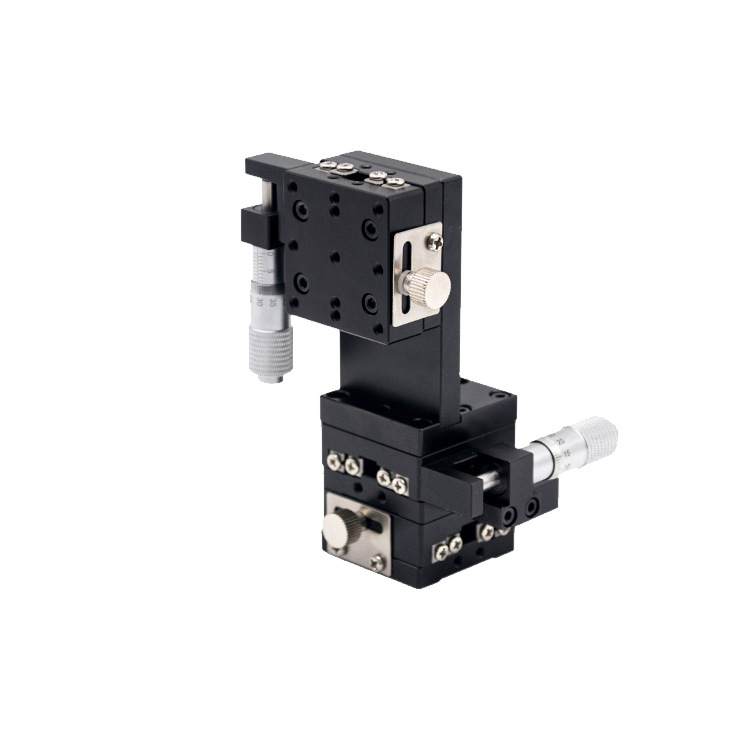
You can buy three single-axis stages and stack them. This is common in labs. You can also buy a preassembled multi axis manual stage. Which is better?
Stacking single-axis stages gives you freedom. You choose travel per axis. You can replace one axis later. But each joint adds a potential weak point. You need adapter plates. You need to make sure the screws don’t bottom out. You need to control flatness.
A preassembled XYZ linear stage assembly is already squared. The manufacturer controls tolerances. It is often lower profile. It looks cleaner. It is easier to mount.
Table 2: Single-Axis Stacking vs. Preassembled Multi-Axis
| Criterion | Single-Axis Stacking | Preassembled Multi-Axis |
| Flexibility | High | Medium |
| Stiffness | Lower, depends on assembly | Higher |
| Lead time | Short, if parts in stock | Short to medium |
| Cost | Similar or slightly lower | Slight premium |
| Maintenance | Easy to swap one axis | May need full return |
| Best for | Prototyping, R&D laboratory setup | Production, semiconductor inspection |
If you build a stack, use thick adapter plates. 6 mm to 10 mm aluminum or steel plates work well. Avoid thin shims.
Manual vs. Motorized
Manual stages win when:
You need a few dozen adjustments per day
You want zero electrical noise for fiber optic testing
You need a low-cost setup
You work in a clean or vacuum environment where motors add complexity
Motorized stages win when:
You need automated sequences
You need remote operation
You need high throughput
For precision metrology and microscope positioning, many users still prefer manual. The tactile feedback helps. You can feel zero-crossing. You can lock the axis and know it stays.
How to Secure Multi-Axis Configurations with Standard Manual Stages
Now let’s get practical. Here is our step-by-step method. It works for both XY manual positioning stage setups and full XYZ linear stage assembly builds.
Step 1: Define Your Load and Travel
Write down:
Payload weight in kg
Required travel per axis in mm
Desired resolution in µm
Available height and footprint
Do not guess. We see labs with a 2 kg camera on a stage rated for 1 kg. That causes sag, backlash, and drift.
A quick rule: choose a stage rated for at least 1.5 times your actual payload. If your payload is 2 kg, pick a stage rated for 3 kg or more. For stacked axes, consider the weight of upper stages. A Z-axis stage sitting on an XY manual positioning stage adds load.
Step 2: Check Stiffness and Flatness
Stiffness is not just about load rating. It is about deflection under load. A stage with crossed roller bearings is stiffer than one with ball bearings. It also has lower friction.
Flatness matters when you stack stages. If the bottom stage top plate is not flat, the upper stage will tilt. This causes cosine error. You may see drift in optical alignment.
Ask for flatness specs. A good standard stage will list flatness of 0.02 mm or better over the travel. Some precision stages list 0.005 mm.
Step 3: Use Proper Adapter Plates
Do not stack stages with only two screws at the corners. That invites rotation. Use adapter plates with multiple screws. Match the hole patterns.
For a multi axis manual stage stack:
Use 4-6 screws per joint
Torque them evenly
Add dowel pins if the stage has dowel holes
Check that screws do not interfere with internal bearings
A 5 mm hex bolt with a washer is common. Torque to 1-2 N·m for small stages. For larger stages, follow the manual. Over-tightening can deform the raceway.
Step 4: Lock Each Axis Before Loading
Most manual stages have a locking mechanism. It may be a side lock screw or a top lock. Use it after each adjustment. But do not over-tighten locks. A hard lock can shift the stage by a few microns. This is important in semiconductor inspection and precision metrology.
A good practice: adjust the axis, then lightly snug the lock. Watch the readout. If it shifts, back off and adjust again. Record the lock torque.
Step 5: Test Repeatability
After assembling your XYZ linear stage assembly, test it. Use a dial indicator. Drive each axis from the same direction. Note the reading. Return to zero. Repeat 10 times.
For a standard XY manual positioning stage, repeatability of ±3 µm to ±5 µm is typical. For high-precision crossed roller stages, ±1 µm to ±2 µm is possible. If your stack shows more than 10 µm variation, check for loose screws, poor flatness, or cable strain.
Materials and Finishes
The material of your stage matters more than you think.
Aluminum stages are lightweight and low cost. They work well for most optical alignment and microscope positioning tasks. But aluminum expands with temperature. If your lab has large temperature swings, you may see drift.
Stainless steel stages are more stable. They cost more. They are better for precision metrology and semiconductor inspection where thermal stability matters.
Black anodized aluminum is common. It reduces reflections. That helps in optical setups. It also resists corrosion.
Brass or bronze inserts are sometimes used for fine threads. They give smooth adjustment. They also prevent galling.
Table 3: Material Comparison for Manual Stages
|
Material |
Weight |
Thermal Stability |
Cost |
Best For |
|
Aluminum |
Low |
Moderate |
Low |
Optical alignment, R&D lab |
|
Stainless steel |
High |
High |
High |
Precision metrology, semiconductor inspection |
|
Black anodized aluminum |
Low |
Moderate |
Medium |
Microscope positioning, fiber optic testing |
Mounting Hole Patterns and Fasteners
Not all stages use the same hole pattern. This is a common source of delay.
Standard sizes we see:
M2 threads on very small stages, 20-30 mm size
M3 threads on 40-60 mm stages
M4 threads on 60-100 mm stages
M6 threads on 100 mm and larger stages
1/4-20 threads on inch-based stages
Some stages have both metric and imperial holes. Check before ordering.
Table 4: Common Hole Patterns
|
Stage Size |
Thread |
Typical Hole Spacing |
|
20 x 20 mm |
M2 |
10 mm grid |
|
40 x 40 mm |
M3 |
20 mm grid |
|
60 x 60 mm |
M4 |
25 mm grid |
|
100 x 100 mm |
M6 |
50 mm grid |
|
125 x 125 mm |
M6 or 1/4-20 |
50 mm grid |
Use the right screw length. A screw that is too long can bottom out and push the stage apart. A screw that is too short may not engage enough threads. The general rule is engagement of 1.5 times the screw diameter.
Common Setup Mistakes
We have seen many setups fail. Here are the top mistakes:
Ignoring center of gravity. A heavy Z-axis on a small XY manual positioning stage creates a cantilever. Keep the load centered. If not, use a larger base or a counterbalance.
Using long vertical posts. A tall XYZ linear stage assembly can vibrate. Keep the vertical axis as low as possible. Use a sturdy base plate.
Mixing incompatible hole patterns. Not all stages have the same mounting grid. Check before ordering. We can supply adapter plates.
Forgetting thermal stability. In R&D laboratory setup, temperature changes cause drift. Use stainless steel or low-expansion materials where possible.
Not securing cables. For manual stages this is less of an issue, but if you add a camera or fiber, strain on cables can pull the stage.
Skipping repeatability tests. People assemble a multi axis manual stage, see it move, and assume it is accurate. Always test. A dial indicator takes five minutes.
Where These Setups Are Used
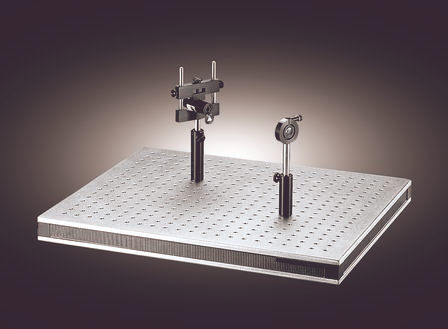
Let’s look at real applications.
Optical Alignment
A standard XY manual positioning stage with fine micrometers is great for aligning lenses, mirrors, and beam splitters. You need smooth motion and locks that hold. The top plate should be flat and stable.
Semiconductor Inspection
Here, stages hold wafers or sensors. The environment is clean. Manual stages avoid particles from motors. A preassembled XYZ linear stage assembly reduces setup time. It also keeps the stack square.
Microscope Positioning
Microscopes need stable XY movement. Manual fine adjustment feels natural. A multi axis manual stage under the sample or the microscope gives precise framing. You can lock the stage and take images without drift.
R&D Laboratory Setup
Labs change setups often. Standard stages with adapter plates let you reconfigure quickly. You don’t need a new design each time. You can reuse the same XY manual positioning stage in different experiments.
Fiber Optic Testing
Fiber alignment is delicate. A manual XY stage gives you the fine touch. You can watch power output while adjusting. Motor noise and vibration can disturb the signal. Manual stages also avoid electrical interference.
Precision Metrology
Measurement setups need repeatability. A well-built XYZ linear stage assembly with crossed roller bearings can hold position for repeated measurements. This is critical in quality control and calibration labs.
Quick Selection Table for Standard Manual Stages
Below is a rough guide. Actual specs vary by manufacturer.
Table 5: Typical Standard Manual Stage Specs
|
Stage Type |
Travel per Axis |
Load Capacity |
Repeatability |
Typical Use |
|
Compact XY manual positioning stage |
5-13 mm |
2-5 kg |
±3 µm |
Fiber optic testing, microscope positioning |
|
Standard XY manual positioning stage |
13-25 mm |
5-10 kg |
±3 µm |
Optical alignment, R&D laboratory setup |
|
Large XY manual positioning stage |
25-50 mm |
10-20 kg |
±5 µm |
Semiconductor inspection, precision metrology |
|
Preassembled XYZ linear stage assembly |
10-25 mm |
3-10 kg |
±3 µm |
Multi-axis optical alignment |
|
Single-axis stack XYZ |
5-50 mm |
2-15 kg |
±5 µm |
Prototyping |
These are not exact quotes. They help you shortlist.
How Can You Build a Reliable Multi-Axis Manual Stage System Using Standard XY and XYZ Linear Stage Assemblies?
This is the long-tail question we promised to answer. The short answer: choose the right standard stage, mount it on a flat base, use adapter plates, lock each axis, and test.
But let’s break it down one more time.
First, decide if you need an XY manual positioning stage or a full XYZ linear stage assembly. If your work is in-plane only, an XY stage is enough. If you need focus or height adjustment, go XYZ.
Second, choose travel. Do not buy 50 mm travel if you only need 5 mm. Longer travel often means lower stiffness and higher cost. In optical alignment, short travel with fine micrometers is usually better.
Third, check load. Include the weight of brackets, cameras, holders, and cables. A multi axis manual stage stack adds weight. The bottom stage carries everything.
Fourth, assemble on a flat surface. Use a granite or aluminum base plate. Tighten all fasteners gradually. Do not tighten one corner fully first. Use a crossing pattern.
Fifth, verify movement. Each axis should move smoothly. No gritty feel. No sudden jumps. If you feel roughness, stop and inspect. It may be contamination or a misaligned adapter plate.
Sixth, lock and measure. Use a dial indicator to confirm the stage returns to zero. Do this before you load the sample or optics.
If you follow these steps, a standard setup will serve you for years.
Case Study: A Fiber Optic Alignment Setup
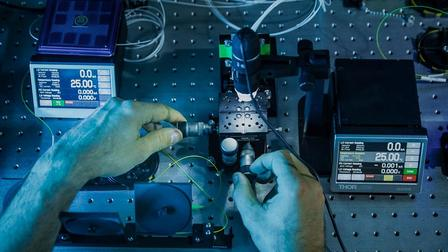
Let’s look at a real example. A customer needed to align a single-mode fiber to a waveguide. They had a tight budget and limited space.
Their requirements:
XY travel: 10 mm per axis
Z travel: 5 mm
Load: 0.8 kg
Repeatability: ±2 µm
Environment: clean lab
They started with three separate single-axis stages. The total stack height was 95 mm. The Z-axis wobbled. The lock shifted the position by 8 µm. They could not hold alignment.
We suggested a preassembled XYZ linear stage assembly with crossed roller bearings. Travel was 13 mm in X and Y, 6 mm in Z. Load capacity was 5 kg. Repeatability was ±1.5 µm.
The result? Total stack height dropped to 55 mm. The lock shift was less than 2 µm. They completed alignment in half the time. The setup is still in use today.
This is why we recommend standard preassembled stages for most multi-axis work.
Frequently Asked Questions
What is the difference between an XY manual positioning stage and two stacked single-axis stages?
An XY manual positioning stage is a single unit with two axes. It is stiffer and lower profile. Two stacked stages give you more travel options, but the joint can be a weak point.
Can I convert a manual stage to motorized later?
Sometimes yes. Many standard stages have motor-ready options. But not all manual stages can be retrofitted. If you think you may go motorized, ask us first. We can suggest a stage that supports both.
How do I know if I need a preassembled XYZ linear stage assembly?
If you need vertical travel and want the simplest setup, get a preassembled XYZ linear stage assembly. It saves time and reduces alignment errors. If you need custom travel per axis, stacking may work better.
What accuracy can I expect from a standard manual stage?
Most standard stages offer repeatability from ±1 µm to ±5 µm. Accuracy depends on the lead screw or micrometer. For fine alignment, choose a stage with a 0.5 mm pitch micrometer or finer.
Why Buy from Us?
We have over 9 years of experience in manual and motorized stages. We make standard XY manual positioning stage models and XYZ linear stage assembly units in-house. We also sell single-axis stages and adapter plates.
We can help you select the right combination. Tell us your load, travel, and application. We will send a recommendation. No pressure. We would rather you buy the right stage than the wrong one.
We also offer custom-configured options if your setup truly needs it. But often, a standard multi axis manual stage will do the job.
Final Thoughts
A multi axis manual stage system does not have to be complicated. Standard stages are reliable. They are easy to mount. They cost less than custom or motorized systems. The key is to secure the stack properly. Use flat plates, enough screws, and careful locking.
Whether you are working on optical alignment, semiconductor inspection, microscope positioning, R&D laboratory setup, fiber optic testing, or precision metrology, a well-chosen XY manual positioning stage or XYZ linear stage assembly will make your work easier.
Need help? Contact us today. Send your requirements. We will help you design a secure multi-axis manual stage setup using standard components.
Need more? We can also provide a full XYZ linear stage assembly with locking mechanisms and adapter plates.
Let’s talk.
Post time: Aug-19-2026


