

A few weeks ago I got a call from an engineer building an optical inspection fixture. He had a standard manual linear stage, set the position, tightened the lock, and walked away. An hour later the alignment was off by 8 microns. Not much in everyday life, but enough to fail his test.
His question was simple: “Is there a manual stage that actually stays where I put it?”
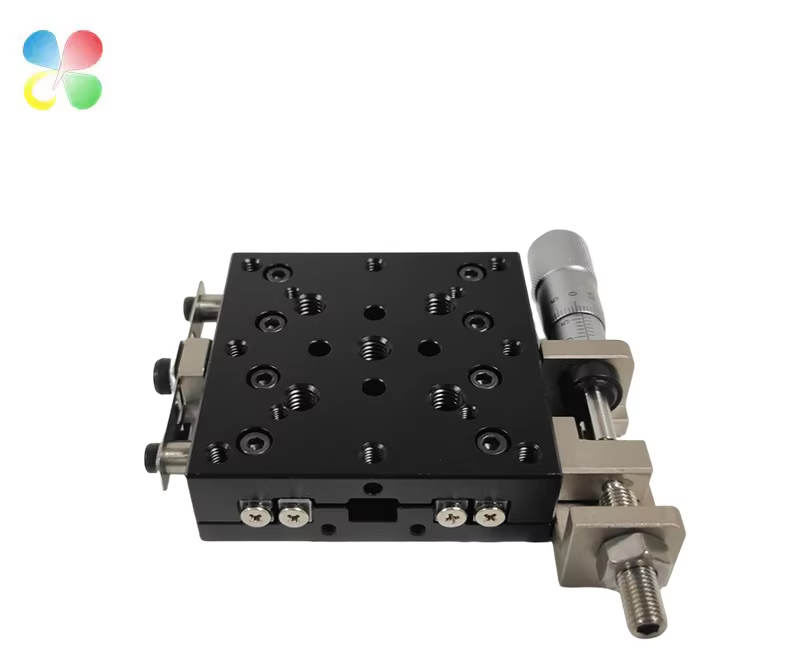
That’s the whole point of this post. If you work with fixtures, alignment jigs, or any setup where you adjust once and then leave it alone, you need a different kind of stage. You need a lockable linear stage — or more precisely, a manual stage with lock that gives you real stable position holding.
Let’s go through what matters and what doesn’t.
What “Set-and-Forget” Really Means
In many production and lab setups, the stage is not moving constantly. You align it once. Then the machine runs for hours, days, or even weeks. The stage just has to hold position.
That sounds easy. But it’s not.
Vibration from nearby motors, temperature changes, cable drag, and even small bumps from operators can shift the stage. If the lock is weak, the carriage creeps. If the screw has backlash, the position drifts. If the lock is a simple thumb screw pressing into a leadscrew, it can dent the screw over time. Then every lock action lands in a slightly different spot.
A stable position holding stage is designed to avoid all of that. The lock is not an afterthought. It’s part of the design.
Why a Standard Manual Stage Usually Isn’t Enough
A standard manual linear stage is built for adjustment. You turn the micrometer, move the carriage, and maybe use a small thumbscrew to add some friction. That friction might hold the position for a short time. But it’s not reliable for long-term use.
Here’s what we see in the field:
Standard thumb screw locks hold maybe 5–15 N of force.
After locking, position drift of 5–20 µm is common.
Repeated locking and unlocking wears the contact point.
The carriage can shift slightly when the lock is tightened.
For quick lab work, that’s fine. For a fixture that runs all day, it’s not.
That’s where a lockable linear stage comes in. The locking mechanism is stronger, repeatable, and designed to avoid shifting the carriage when you engage it.
Lockable Linear Stage vs Standard Manual Linear Stage: Key Differences
People often search for “lockable linear stage vs standard manual linear stage” because they want to know if the extra cost is worth it. In most set-and-forget applications, it is.
Here’s a direct comparison:
| Feature | Standard Manual Linear Stage | Lockable Linear Stage |
| Locking mechanism | Simple thumb screw or none | Dedicated split nut, wedge, or brake |
| Holding force | 5–15 N typical | 20–150 N depending on design |
| Drift after lock | 5–20 µm common | <2 µm typical |
| Repeatability after re-lock | Low | High |
| Wear on leadscrew from lock | Possible denting | Minimal |
| Price | Lower | 10–30% higher |
The price difference is real, but so is the cost of scrap parts, failed inspections, and time spent realigning. In a production fixture, a manual stage with lock usually pays for itself quickly.
Types of Locking Mechanisms You Should Know
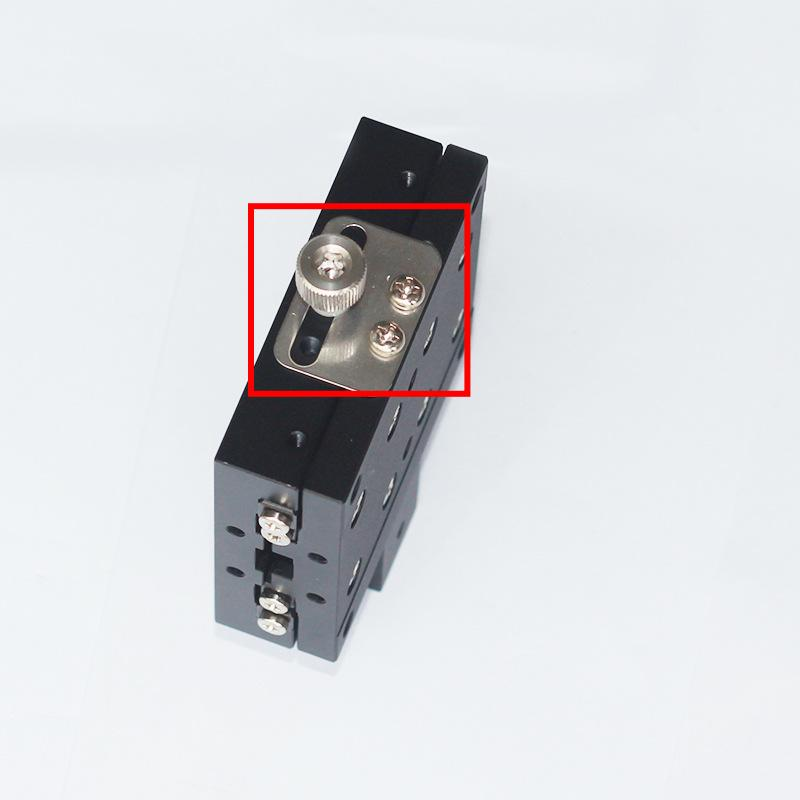
Not all locks are the same. Here are the four types we work with most often.
1. Side Thumb Screw Lock
This is the simplest type. A small screw presses against the leadscrew or the carriage from the side.
Best for: light duty, occasional adjustment, low vibration.
Holding force: 5–15 N.
Drift after lock: 5–10 µm.
It’s cheap and compact, but not great for high stability. If someone says they already have a lockable stage, this is often what they mean.
2. Split Nut Lock
A split nut clamps around the leadscrew. When you tighten the lock, the nut grips the screw evenly from both sides.
Best for: medium duty, frequent adjustment, moderate vibration.
Holding force: 20–60 N.
Drift after lock: 2–5 µm.
This is a solid choice for many optical alignment fixture positioning tasks. The lock doesn’t push the carriage sideways, so the position stays put when you engage it.
3. Wedge Lock
A wedge pushes the carriage against the base or guideway. The locking force is spread over a larger area.
Best for: high stability, heavy loads, strong vibration.
Holding force: 50–150 N.
Drift after lock: <2 µm.
We recommend this type when someone asks for a stable position holding stage in a production environment. The wedge holds the carriage firmly without deforming the leadscrew.
4. Disc Brake Lock
A friction disc sits on the leadscrew or motor shaft. Engaging the lock clamps the disc.
Best for: frequent adjust-and-lock cycles, automated systems with manual backup.
Holding force: 10–40 N.
Drift after lock: 2–6 µm.
This type is less common in pure manual stages. You see it more often in motorized stages with a manual override. But it works well if you need a light, repeatable lock.
Key Specs for Stable Position Holding
When you compare different models, look past the travel and load ratings. These five specs tell you more about stability.
1. Holding Force
This is the force the lock can resist before the carriage slips. For a fixture that sees occasional bumps, 20–30 N might be enough. For a machine with vibration, aim for 50 N or more.
2. Drift After Lock
This is how much the position changes after you lock it. Some locks shift the carriage slightly when they engage. A good design keeps this under 2 µm. We test our stages by locking them 100 times and measuring the position each time.
3. Locking Repeatability
Open the lock, move the stage, lock it again. Does it return to the same spot? Good locking repeatability means the lock doesn’t create a new position error every time.
4. Cross Roller Guide vs Ball Guide
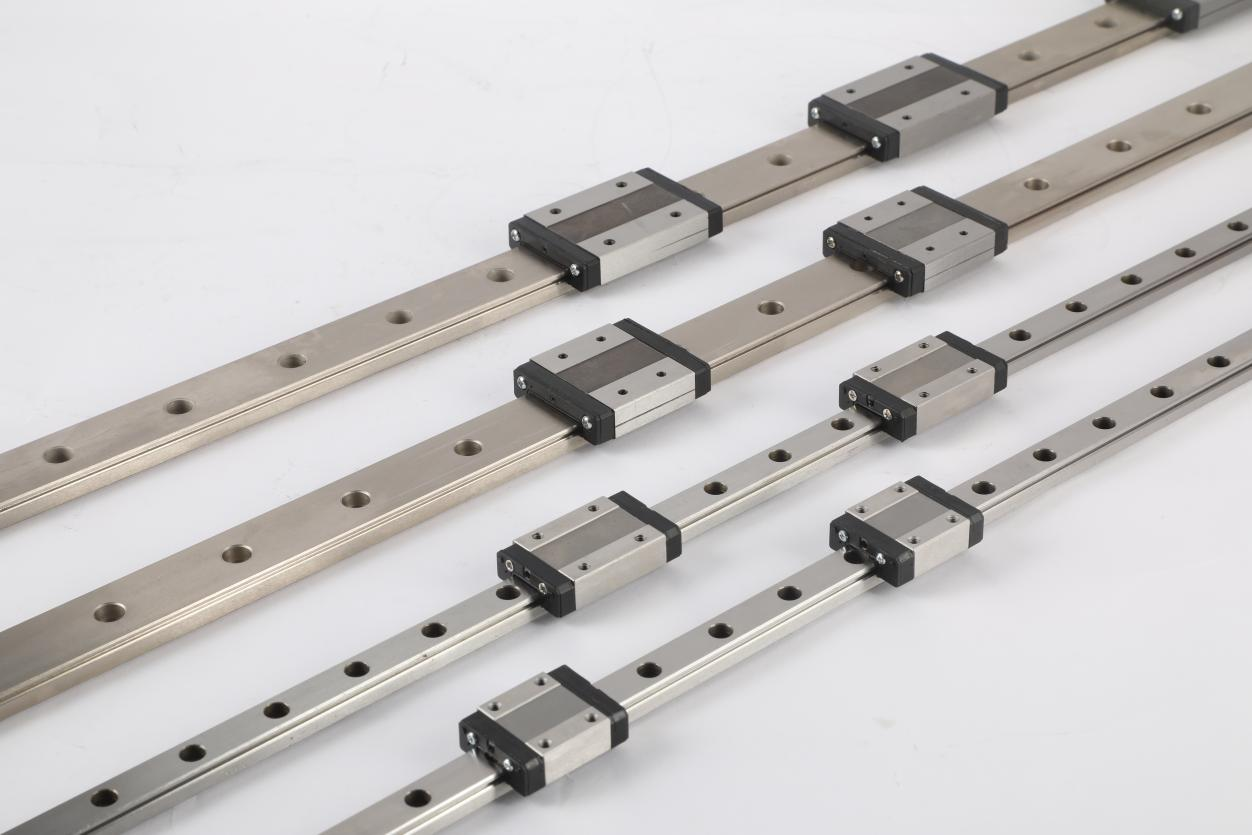
Crossed roller guides are stiffer and hold position better than linear ball guides in small manual stages. The larger contact area resists micro-movement. For a lockable linear stage, we almost always use crossed roller guides.
5. Leadscrew Pitch
A finer pitch gives you more resolution and better holding. A 0.5 mm pitch screw is easier to hold than a 2 mm pitch screw. The lock doesn’t have to work as hard because the mechanical advantage is higher.
Here’s a quick reference table based on typical use:
|
Application |
Required holding force |
Acceptable drift |
Recommended lock type |
|
Optical alignment fixture |
20–40 N |
<2 µm |
split nut or wedge |
|
Laser mirror mount |
10–30 N |
<3 µm |
split nut |
|
Camera focus jig |
15–30 N |
<5 µm |
side screw or split nut |
|
Dispensing nozzle alignment |
30–60 N |
<2 µm |
wedge |
|
Wafer inspection fixture |
40–80 N |
<1.5 µm |
wedge |
How Do You Choose a Lockable Linear Stage or Manual Stage with Lock to Achieve Stable Position Holding in Set-and-Forget Applications?
That’s the long question everyone asks. Let’s break it into plain steps.
Step 1: Define the load and vibration level
What sits on the stage? How heavy is it? Does the machine vibrate? If the load is 2 kg and the machine has a small vibration motor nearby, you need a stronger lock than a 0.5 kg lab fixture.
Step 2: Decide how often you’ll adjust
If the stage is set once and never touched again, you can use a simpler lock. But if operators adjust it between shifts, look for a lock with good repeatability. Otherwise, every shift starts with a new alignment error.
Step 3: Check the lock mechanism
Ask the supplier what type of lock is used. Avoid side thumb screws that press into the leadscrew if you need long-term stability. A split nut or wedge lock is much better for a stable position holding stage.
Step 4: Look at the test data
A good manufacturer can provide drift data after repeated locking. Ask for it. If they can’t, you’re guessing. We include a basic test report with every lockable stage we ship.
Step 5: Consider the mounting surface
Even the best manual stage with lock won’t hold position on a warped bracket. The base must be flat. We recommend 5 µm flatness or better over the stage footprint. A wavy surface lets the carriage flex and release tension over time.
Step 6: Don’t forget cable or tube routing
If your stage has a vacuum line or sensor cable attached, that adds a small side force. The lock has to resist that force too. A cable pulling sideways with 5 N can slowly move an unlocked stage. A good lock cancels that out.
Application Example: Optical Alignment Fixture Positioning
Let me give you a real example. We worked with a customer doing optical alignment fixture positioning for a laser measurement system. They had a manual stage holding a mirror mount. The total moving mass was 1.8 kg.
The original setup used a standard manual stage with a side thumb screw. The operator would align the mirror, tighten the screw, and start the measurement. But after about 30 minutes, the mirror would shift by 4–6 µm. The laser spot moved, and the data was unusable.
We replaced it with a 40 mm wide lockable linear stage using a split nut lock. The holding force was 45 N. After locking, the drift was under 2 µm. The operator could adjust the mirror, lock it, and leave it for an entire shift without realignment.
That one change saved them about 45 minutes of realignment time per day. It also reduced measurement errors caused by position drift. The stage cost about $120 more than the original. It paid for itself in less than a week.
This is exactly the kind of application where a manual stage with lock makes sense. You adjust once, lock it, and trust it to stay put.
Real Numbers From Our Lockable Manual Stage Line
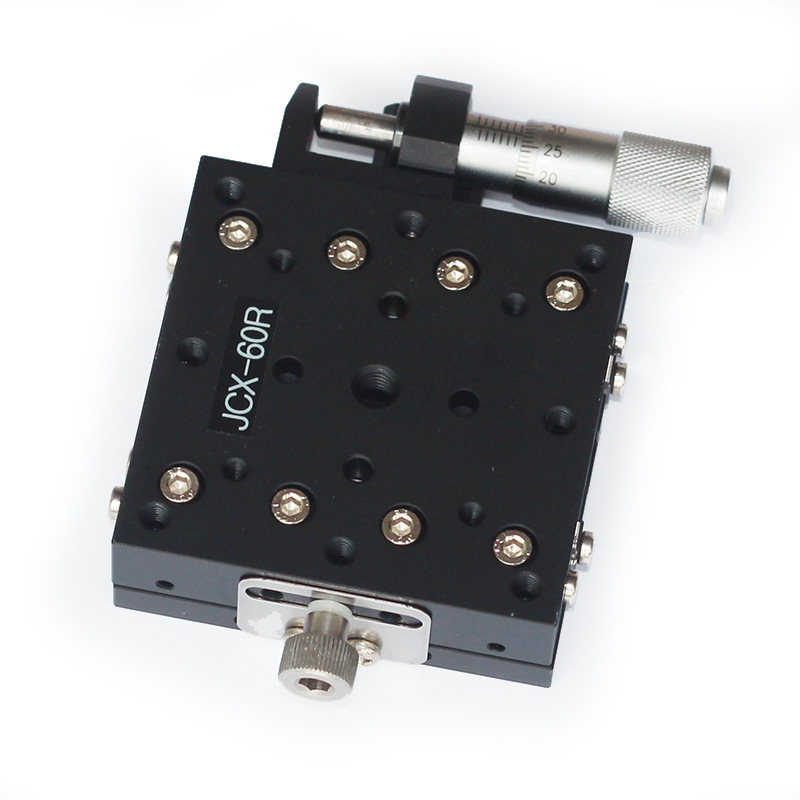
Here are some actual specs from models we build. Prices are reference only and change based on options.
|
Model |
Travel |
Load capacity |
Lock type |
Load Capacity |
Drift after lock |
Parallelism |
|
JCX-60R |
60*60 mm |
0.25 kg |
side thumb screw |
6kgf |
<5 µm |
30µm |
These are not the only options, but they cover most set-and-forget applications we see.
The jump from MS-30L to MS-40L is the biggest improvement in stability. That’s because the split nut lock holds far better than a side screw. If you need a stable position holding stage for production, start at the MS-40L level or higher.
Installation Tips That Make a Difference
A good stage can still drift if installed wrong. Here are three things to check.
Use a flat, rigid base. Bolting a lockable linear stage onto a thin aluminum plate can cause slow position changes as the plate relaxes. Use a machined base or add a stiff spacer.
Don’t over-tighten the lock. More force is not always better. Over-tightening a split nut can deform the leadscrew and create a new wear point. Tighten until you feel a firm stop, then stop.
Let the stage settle after locking. Some locks cause a tiny initial movement that relaxes over a few seconds. After locking, wait 5–10 seconds before the final alignment check. This is especially important in optical alignment fixture positioning where a micron matters.
Common Mistakes to Avoid
Mistake 1: Buying a standard stage and hoping the thumbscrew works.
It won’t, not for long. The thumbscrew will wear the screw, and drift will get worse over time.
Mistake 2: Ignoring the load direction.
A horizontal stage holding a vertical load behaves differently from a vertical stage. Make sure the lock can handle the actual load direction, not just the catalog rating.
Mistake 3: Forgetting about vibration.
A nearby motor or pump can shake the stage loose. If vibration is present, choose a stronger lock. A wedge lock is usually better than a side screw.
Mistake 4: Using a lockable stage without checking flatness.
If the base is warped, the carriage will store stress. Over time, that stress releases and the position shifts. Check flatness before blaming the stage.
Mistake 5: Not asking for test data.
Some suppliers won’t give you drift numbers. That’s a red flag. A reputable manufacturer tests locking repeatability and drift. We do it on every unit.
How We Can Help
We’ve been manufacturing manual and motorized positioning stages for over 9 years. Our product line includes manual slides, electric stages, rotary tables, and automation alignment platforms. R&D, production, and sales are all in-house, so we can customize quickly.
If you need a lockable linear stage with a specific travel, load, or mounting pattern, we can build it.
If you need a manual stage with lock that works in a cleanroom or vacuum environment, we can do that too.
If you’re not sure which stable position holding stage fits your fixture, send us a sketch.
Our engineers usually respond within 24 hours. You’ll get a straight answer on feasibility, lead time, and price. No pressure. If a standard stage won’t work, we’ll tell you. If a custom solution makes more sense, we’ll quote it.
To get the fastest useful answer, send us:
Your available space (width, height, length)
Required travel and load
Vibration level and load direction
Required holding force or acceptable drift
Any special environment requirements
That’s enough for us to recommend a model or propose a custom design.
FAQ
Q: How much holding force do I need for a set-and-forget fixture?
A: For light lab use, 15–30 N is usually enough. For production equipment with vibration, aim for 50 N or more. We can help you calculate it if you send the load and vibration details.
Q: What is the difference between a split nut lock and a wedge lock?
A: A split nut clamps the leadscrew. A wedge pushes the carriage against the base. Wedge locks hold better under high load and vibration, but they cost more and take up slightly more space.
Q: Can I add a lock to an existing manual stage?
A: Sometimes. Some stages accept an aftermarket lock kit. But the result is rarely as good as a stage designed with the lock built in. We usually recommend replacing the stage with a proper lockable linear stage.
Q: How often should I check the lock?
A: For production fixtures, check once per shift. For lab setups, once per week is usually enough. If you notice position drift, check the lock wear and the mounting surface flatness.
Q: Do lockable stages work in vertical applications?
A: Yes, but the lock has to resist gravity constantly. A wedge lock or a split nut with a high holding force is the safer choice. Don’t use a side thumb screw for vertical loads.
Final Thoughts
A lockable linear stage is not just a standard stage with a screw added. It’s a different design. The lock is engineered to hold position without shifting the carriage, without denting the screw, and without losing repeatability over time.
If your work involves fixtures, alignment jigs, or any set-and-forget setup, don’t settle for a stage that drifts. A manual stage with lock and proper stable position holding will save you time, reduce scrap, and make your process more predictable.
Need a recommendation? Contact us. Tell us what you’re building. We’ll help you pick the right stage or build one that fits exactly. With 9 years of experience and a full line of manual and motorized positioning platforms, we deal with set-and-forget motion every day.
Post time: Aug-18-2026


