

Top 5 Mistakes to Avoid When Buying Manual Translation Stages (And How to Get It Right the First Time)
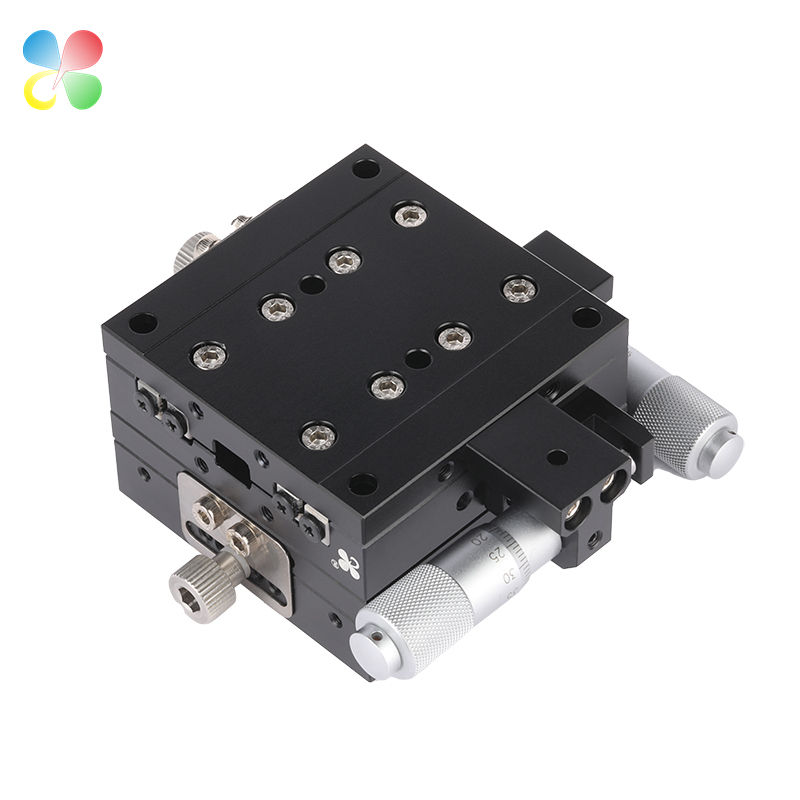
We’ve been designing and building manual translation stages for over nine years. In that time, we’ve spoken with hundreds of engineers, lab managers, and procurement specialists. A surprising number of those conversations start the same way: someone bought a stage that doesn’t fit, drifts after three months, or can’t hold the load. Then they come to us looking for a fix.
It’s not that people don’t do their homework. It’s that the real-world details get missed during B2B manual stage procurement. If you’ve ever asked yourself, “What are the top 5 mistakes to avoid when buying a manual translation stage, and what should B2B buyers prioritize in custom manual linear stage procurement to ensure long-term precision?”, this post is for you.
We’ll walk through the five mistakes we see most often. We’ll share real numbers, easy comparison tables, and a few stories from our own factory floor. By the end, you’ll know exactly what to look for — and what to avoid.
Mistake #1: Ignoring Load Capacity and Travel Length Until It’s Too Late
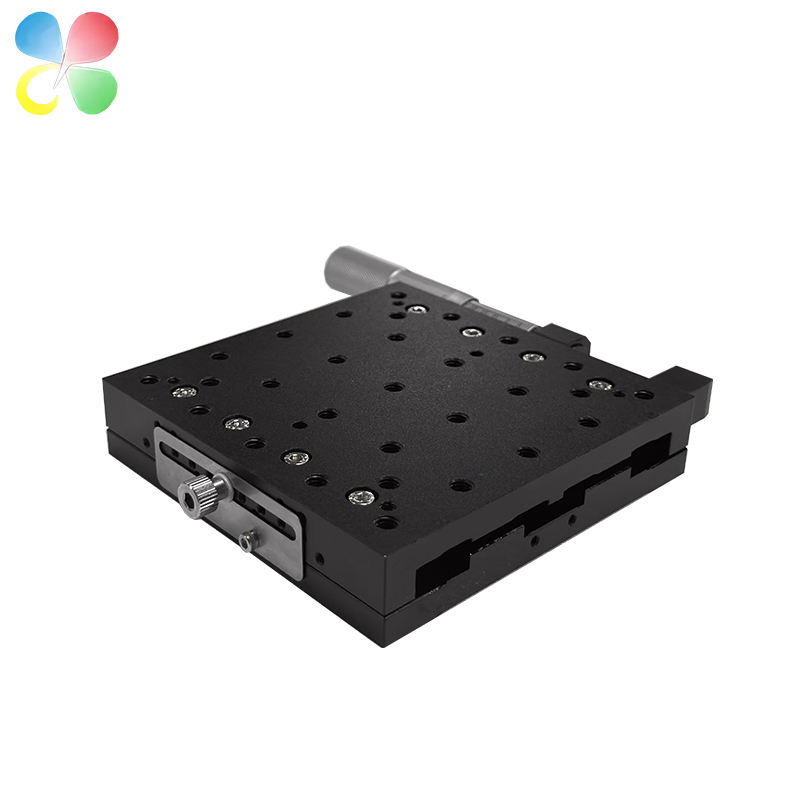
This is the number one reason a customer calls us two weeks after delivery. The stage looks fine on paper. It has the right travel range. But nobody checked the real, working load.
A manual translation stage isn’t just carrying the sample or the camera. It’s also handling the bracket, the adapter plate, maybe a small clamp. That extra 200 grams can push a stage rated for 2 kg right over the edge. We’ve seen a 1.5 kg payload on a 2 kg stage fail after six months because the center of load was too far forward.
What “Load Capacity” Really Means
When we say a stage holds 5 kg, that’s a centered, static load. If your load is cantilevered, or if you’re moving the stage frequently, the effective capacity drops. Crossed-roller bearing stages, for example, handle moment loads much better than ball bearing types. But even they have limits.
Here’s a quick look at how load specs can mislead you if you don’t dig deeper.
|
Spec on Paper |
What You Might Think |
The Real-World Limit |
|
10 kg max load |
I can put 10 kg safely | With a 50 mm overhang, safe load drops to around 4–5 kg |
|
25 mm travel |
25 mm of usable movement | Lost 2–3 mm at each end due to limit stops and safety margin |
|
0.01 mm resolution |
I get 10 µm accuracy everywhere | Repeatability is usually 2–3 times worse than resolution under real conditions |
How to Avoid This Mistake
During any B2B manual stage procurement, write down not just the sample weight, but the total weight of everything moving. Then add a 30% safety margin. Also, ask the supplier for a moment-load curve if your setup is asymmetric. A good custom manual linear stage can be designed with longer carriages or dual rails to handle these moments. If you’re not sure, talk to us before you buy. It’s a five-minute conversation that can save months of headache.
Mistake #2: Picking the Wrong Bearing and Drive for Your Daily Workflow
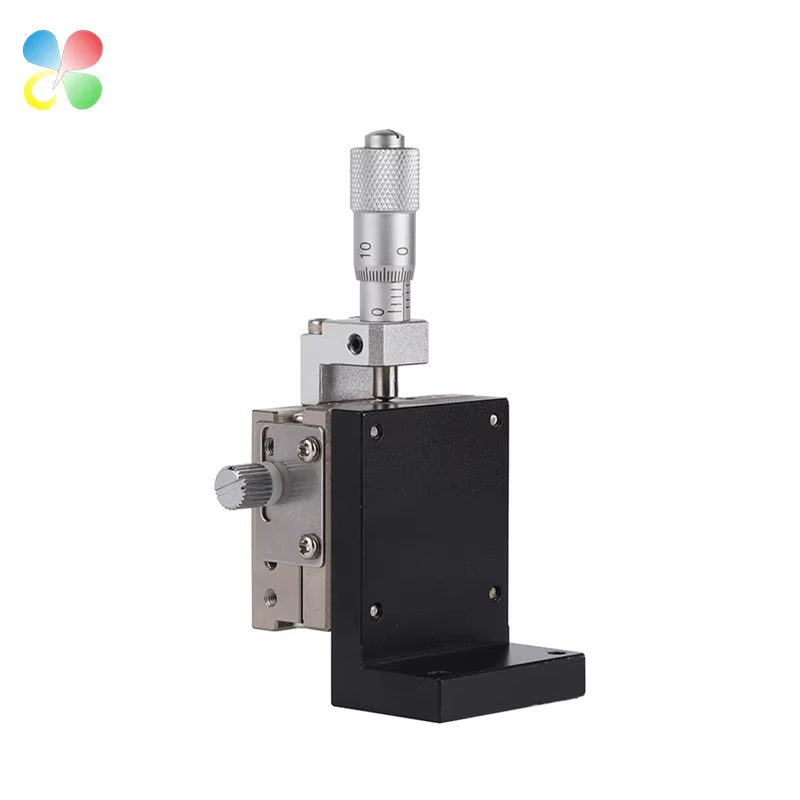
Not all manual positioning stages feel the same. Turn the micrometer on a dovetail slide and then on a crossed-roller stage. The difference is night and day. Yet we see many B2B buyers choose purely on price, then wonder why their alignment drifts.
Understanding Your Bearing Options
The bearing type affects stiffness, smoothness, and lifespan. Here’s a table that compares what we commonly offer for custom manual linear stage builds. It’s a good reference whether you buy from us or not.
|
Bearing Type |
Best For |
Smoothness |
Stiffness Under Load |
Typical Lifespan |
|
Crossed-Roller |
High precision, Optical Alignment, semiconductor | Very smooth, low friction | Excellent | 5+ years with minimal maintenance |
|
Ball Bearing (linear guide) |
General lab use, moderate loads | Smooth | Good | 3–5 years |
|
Dovetail Slide |
Heavy loads, rugged environments | Moderate, can have stick-slip | Very good | 10+ years if lubricated |
|
Plain Bearing (sleeve) |
Low-cost, short travel, occasional use | Stiff, may have play | Low | 2–3 years |
For Optical Alignment work, we almost always recommend a crossed-roller manual translation stage. The motion has to be dead smooth, with no jumps. A fiber optic alignment setup that needs 0.5 µm precision will punish any bearing roughness.
Don’t Forget the Drive Mechanism
The micrometer or fine screw is your daily interface. A standard micrometer gives you 0.01 mm graduations. A fine-pitch screw might give you 0.5 mm travel per revolution for ultra-fine control. If your technician needs to make hundreds of adjustments a day, don’t cheap out on the drive. Their fingers will thank you — and so will your throughput. We’ve replaced dozens of coarse, jerky drives for customers who initially saved $50 but lost days of productivity.
Mistake #3: Assuming a Manual Stage Always Beats a Motorized One on Cost (Manual Translation Stage vs. Motorized Linear Stage)
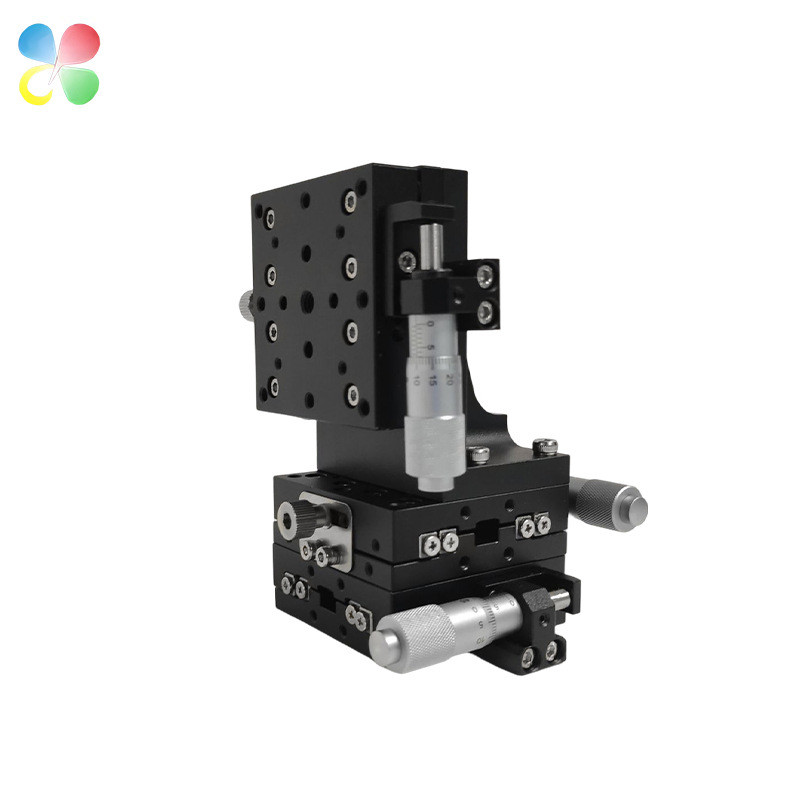
This is a debate we hear all the time. And it’s not as simple as “manual is cheaper.” When you factor in operator time, repeatability, and process control, the equation flips more often than you’d think. Let’s lay out a real Manual Translation Stage vs. Motorized Linear Stage comparison.
Cost Breakdown Over Three Years
| Factor | Manual Translation Stage | Motorized Linear Stage |
| Initial purchase cost (single axis) | $30 – $800 | $4,00 – $3,000 |
| Installation and setup time | 1–2 hours | 3–5 hours (with controller) |
| Operator time per alignment (typical) | 3–5 minutes | 15–30 seconds (automated) |
| Process repeatability | Depends on operator skill | High, programmable |
| Maintenance over 3 years | Clean and lube, $20/year | Controller checks, cable replacement, $100/year |
| Total cost for 10,000 alignments | Low hardware cost + ~500 hours labor | Higher hardware cost + ~80 hours labor |
If your lab does 20 manual alignments a day, that’s over 400 hours of skilled time per year. At a fully loaded cost of $40/hour, you’re spending $16,000 on labor annually just for one axis. Suddenly, a $2,500 motorized stage doesn’t look expensive.
When a Manual Translation Stage Shines
Manual stages are perfect when:
You need tactile feedback, like in Optical Alignment where you feel the peak power coupling through a fiber.
Your setup changes constantly — research labs, prototype builds.
You only need a few adjustments per day.
If your process is fixed and high-volume, lean toward motorized. But if you need both worlds, we can design a custom manual linear stage with a motor-ready mount, so you can upgrade later. This is a smart middle path we suggest often during B2B manual stage procurement.
Mistake #4: Forgetting That Material and Environment Dictate Life
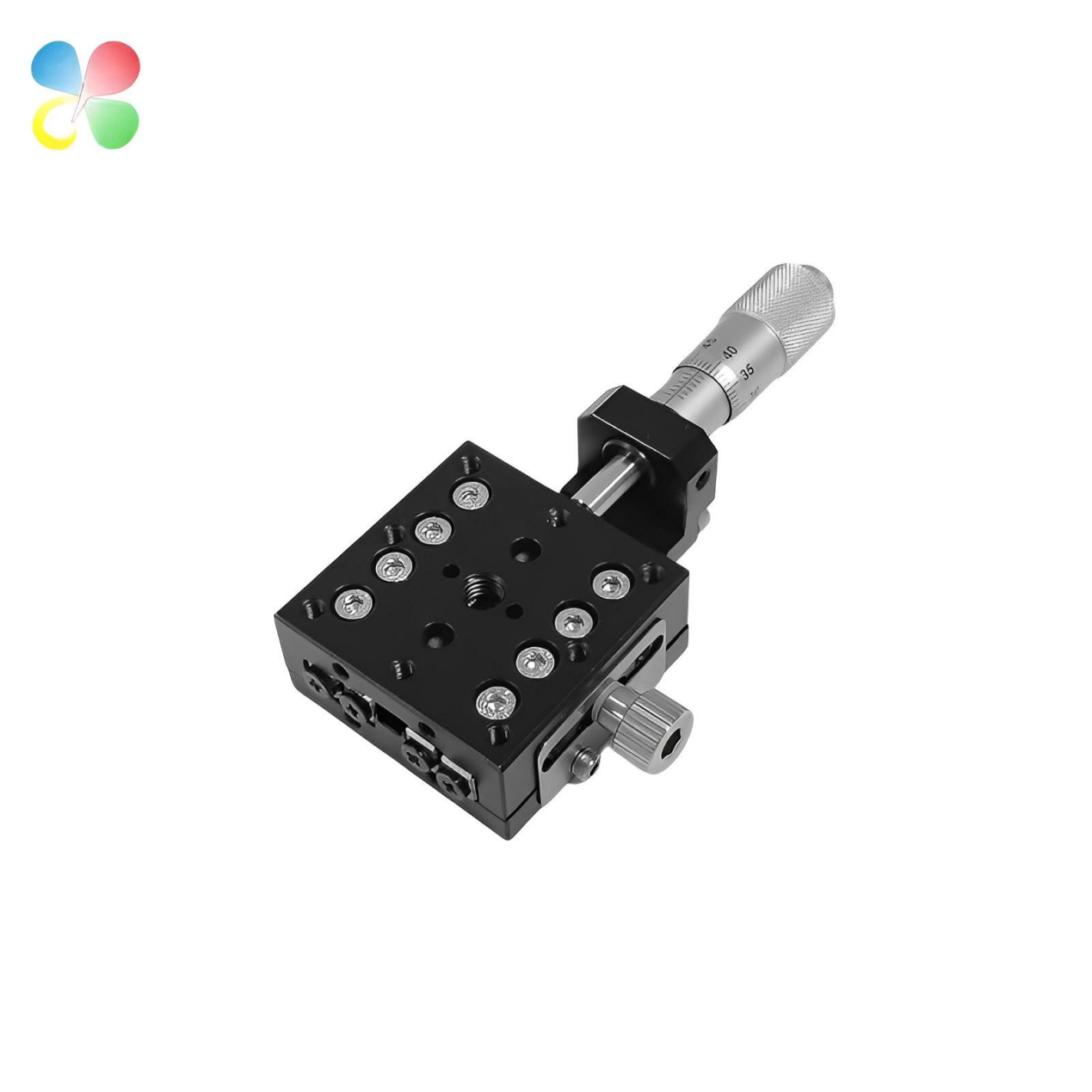
A stage that works beautifully in a clean optics lab might rust within weeks in a factory next to a CNC machine. We’ve had a customer order an all-aluminum stage, then place it in a humid test chamber. The aluminum oxidized, the micrometer barrel got stiff, and the whole unit was scrapped in four months.
Material Choice Table
|
Material |
Good For |
Watch Out For |
|
Aluminum 6061, anodized |
Most lab environments, Optical Alignment, microscopy | Salty air, strong chemicals, high humidity without sealing |
|
Stainless Steel 304/316 |
Vacuum, cleanroom, corrosive environment | Heavier, more expensive, softer threads |
|
Brass/Bronze components |
Smooth drives, anti-backlash nuts | Not for vacuum due to outgassing |
|
Steel with electroless nickel plating |
Semiconductor, harsh industrial | Cost, longer lead time |
A custom manual linear stage gives you the freedom to specify materials that match your exact environment. When you’re handling B2B manual stage procurement, always tell the supplier about ambient temperature, humidity, and any chemical exposure. We’ve saved customers thousands by recommending stainless steel fasteners and special grease from day one. Don’t wait until the stage fails.
A Quick Story
Last year, a biomedical startup contacted us about a manual translation stage for a microfluidics test rig. They used saline solutions that would drip occasionally. We built them a custom manual linear stage with 316 stainless steel plates and IP54 seals around the drive. It’s been running 14 hours a day since then. The off-the-shelf stage they used before? Dead in two months. The right material choice matters more than any other single spec.
Mistake #5: Treating the Supplier Like an Order Taker, Not a Partner in B2B Manual Stage Procurement
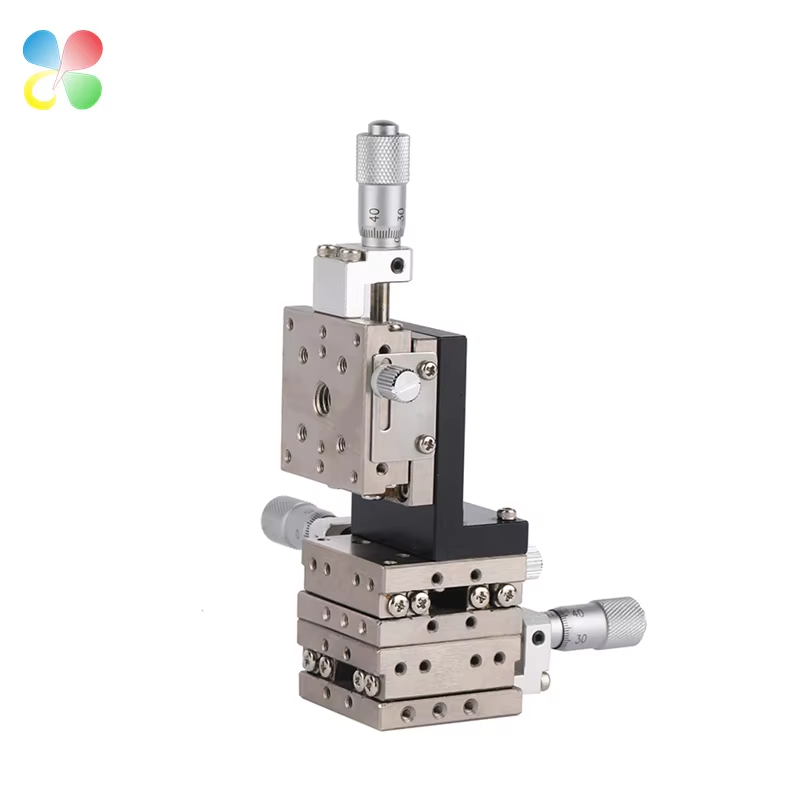
This is the mistake that wraps all the others together. Too many procurement teams send an RFQ, pick the lowest bid, and move on. A manual translation stage isn’t a commodity like screws. The supplier’s engineering support, lead time honesty, and post-sale service directly affect whether your setup works six months later.
What to Check Beyond the Quote
Application review: Does the supplier ask about your full setup, or just quote the part number you gave? The first is a partner. The second is a risk.
Customization track record: How many custom manual linear stage projects have they done? Ask for case studies. We’ve done over 400 custom projects. That experience means we can spot design problems before they hit your bench.
After-sales support: Will they answer a call when the stage feels a bit rough after a year? We take those calls. We’ve shipped replacement micrometers same-day.
Lead time reality: A promise of “two weeks” that becomes six hurts your project. We publish live lead times and update customers weekly. Transparency builds trust in B2B manual stage procurement.
Long-Term Precision Is About Partnership
The question we posed at the start — what should B2B buyers prioritize in custom manual linear stage procurement to ensure long-term precision? — has a clear answer. Prioritize the supplier’s engineering depth and willingness to work with you. A good manual translation stage will keep its specs for a decade if it’s designed right and supported. We’ve had stages come back for recalibration after 7 years that were still within 2 µm of original specs. That’s what partnership delivers.
If you’re in the middle of sourcing, we invite you to reach out. Tell us about your application — optical alignment, semiconductor inspection, laser processing, whatever it is. We’ll help you define the load, choose the right bearing, decide between manual and motorized, and pick materials that won’t let you down. Even if you don’t buy from us, the advice is free and grounded in real factory floor experience.
Pulling It All Together: A Quick Checklist for Your Next Manual Translation Stage Purchase
Before you sign that PO, run through these five points:
Load & Travel: Total moving mass + 30% margin. Check moment load limits.
Bearing & Drive: Match the bearing type to your precision and lifetime needs. Don’t skimp on the micrometer.
Manual vs. Motorized: Calculate total cost over three years, not just unit price. Consider a hybrid approach.
Materials: Match stage materials to your environment. If unsure, ask the supplier.
Supplier Partnership: Demand application review, check customization history, and verify after-sales support.
A manual translation stage is a long-term investment. Whether you need a standard model or a fully custom manual linear stage, avoiding these five mistakes will save your team time, money, and frustration. We’ve seen the difference firsthand across thousands of units shipped from our factory. The right stage, chosen carefully, becomes invisible — it just works, day after day, for years.
Let’s Talk About Your Setup
Every B2B manual stage procurement we handle starts with a conversation, not a part number. We want to understand what you’re building, where it will live, and how many cycles it needs. With nine years of in-house design and manufacturing, we can offer standard stages from stock or a custom manual linear stage with exactly the travel, materials, and drive you need. Our team has supported Optical Alignment setups, laser workstations, metrology labs, and university research groups worldwide.
If you’re ready to get it right the first time, contact our engineering team today. We’ll help you spec the perfect manual translation stage — and we’ll back it with support that lasts as long as the stage itself.
Post time: Jul-28-2026


